Kbond: Defining Men's Style and Adding Women's to the Mix
Kbond’s storefront mantra—“translating store activities into a visual language”—coolly conveys exactly what this menswear and lifestyle store is all about.
Kbond has become a popular destination for global culturati: editors, designers, artists, Japanese, Brits and, of course, actors (Brad Pitt’s wardrobe in “The Mexican” is all from Kbond).
The simple yet crafty display-oriented store features certain hospitalities that keep customers coming back for more. One is an ultra-sleek mini-disk station that allows customers to listen to, and purchase, the latest mixed DJ jams before or after they browse around the store. On their way out, customers can have their new purchases scented via Kbond’s herb-infused steamer.
The owners, Karen Kimmel and her husband, James Bond, opened the contemporary, designer menswear store on Beverly Boulevard in 1999. Bond, an art director, manages the retail operations, and Kimmel, an installation artist, handles the creative side of the business. The pair moved to Los Angeles from New York in May 1999 when Bond began to freelance as a commercial art director and prop stylist for commercials and videos featuring Madonna, the Rolling Stones, Tricky, PJ Harvey and others. Kimmel had already established herself in New York art circles with her signature interactive installations. Her work has appeared in MOCA Chicago, the Grammercy Art Fair and the Artists’ Space in New York City. Not surprisingly, Kimmel is the mastermind behind Kbond’s distinct art gallery vibe.
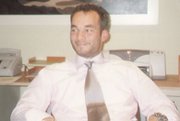
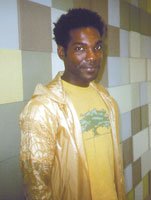
California Apparel News contributing writer Jed Wexler recently sat down with co-owner James Bond and retail manager Ray Campbell to talk about Kbond’s future—including a women’s clothing boutique set to open in November 2001— upcoming trends and how the threesome manage to stay so ahead of the fashion curve.
James Bond,Kbond co-owner
What is your business philosophy?
J.B: We never really had one. That’s why it works. We never had a retail store before, we just knew what we liked and thought there was a void in the market for a men’s lifestyle store of this kind in Los Angeles.
What is your impression of fashion in Los Angeles right now?
J.B: It’s starting to change considerably because a lot of people are moving here from New York and from a lot of other cities because it’s less rocker, jeans, T-shirts—pioneers with a bit more of a casual look and business casual. Not everybody has to wear a shirt and tie everyday. You still need to look presentable, but not necessarily decked out in a shirt and tie.
What is your take on retail in Los Angeles?
J.B: There are many different levels of shoppers and I think you can say the same thing for other stores. Some stores cater to people who don’t want to spend more than $10 to $15 for a T-shirt, but then you have stores that charge $1,000 for a T-shirt.
How do you distinguish yourself from the crowd?
J.B: I think everybody wanted to be like Fred Segal and Maxfield’s, and there was really no difference. [We noticed] a lot of people weren’t selling British or Japanese lines. Stuuml;ssy Union was selling Japanese lines but they were more streetwear and skate-oriented. You see a lot of Japanese clients on Rodeo drive shopping at Burberry—which I wear anyway—and I thought it would be perfect for this store; we just started to add them. There are thousands of lines out there. It’s not just the half-dozen you see at Fred Segal or Maxfield’s.
What is your version of streetstyle?
J.B: Kbond is a lifestyle source so it is a mixture of everything—sports, classics, and new designers. In sports you’re going to get the streetstyle. We are starting to carry DC shoes, for example, and Final Home. In classics, we carry Lacoste, Fred Perry, Ben Sherman and Duffer St. George. In new designers we just went through and discovered the best hard-to-find emerging talent.
I see you carry Levi’s Fischerspooner Vintage line. The company doesn’t choose many retailers to sell it. Why did they choose you?
J.B: My wife [and] partner was a friend of Casey Spooner, whom we knew from New York City. They worked with Levi’s so they liked the store and it just happened.We’ve done a lot of limited pieces with Levi’s. We are one of the few stores they target that brings extra cache to wear Levi’s. A few years ago, Levi’s was just Levi’s. They just recently were brought back into the fold of fashion.
Do you appeal to the tastemaker, the trendsetter, as your niche?
J.B: [We cater to] the stylists and people in the art field who are looking for that more unusual piece or accessory to add to their basic wardrobe. Not everyone can afford to wear expensive clothes every day. It’s just not feasible. We’re good at helping you find one or two special accessories that tie into everything you own.
Womenswear appears to be at a standstill from a design standpoint. Everything that can be rehashed has been. It’s seems like menswear has now taken over women’s as the more-innovative, exciting place to find fashion. Would you agree?
J.B: Right now, Los Angeles is setting a trend as the place where a lot of men are beginning to be really creative with their style of dress. I think a lot of designers haven’t tapped into this market yet. It’s a new thing, a new flavor. I am sure in a few years women’s clothing will be exciting again—there is still exciting women’s stuff. It’s definitely a men’s market right now. I mean, Macy’s and Bergdorf Goodman’s are opening huge men’s department stores and lifestyles [stores]. Men’s is definitely on the upswing.
Is it more fashionable right now in terms of its progress compared to women’s?
J.B: Definitely. The progress is definitely greater than women’s but women’s has always been so far advanced anyway that I think men’s is just now catching up. Women will always be more advanced. Women are very challenging to reach from a design standpoint.
Where do think streetstyle is right now and where is it heading?
J.B: The designers are really going to have to grow with the clientele. Men’s fashion started to take off a few years ago, when the Beastie Boys started their whole style of dress, which brought the whole street scene together. Those guys who were in their twenties are now in their thirties and have higher-paying jobs and are looking for those more unique pieces that still are casual yet very fit-oriented. It’s very clean and I think it’s just going to get cleaner. Cargo pants aren’t really going to do it.
How do you find your lines?
J.B: In the beginning it was a combination of us pursuing them and people pursuing us. We do a lot of research. Before we opened the store we spent six weeks in London, Australia, and New York.
What are your best-selling lines and/or the lines that get the best reaction?
J.B: Ben Sherman, because it’s a really nice-looking product for the price. Levi’s always sells. We carry the vintage line, which sells really well. Duffer St. George from London always sells. Product 250 sells well. Modern Amusement sells out—they’re local. Roial is good; they’re really basic, nicely fitted, easy-to-wear. A lot of men in Los Angeles like breathable material—something that is not too tough to wear [because] you’re in and out of your car [and because of] the temperature; comfort works here.
Are you at the forefront of new trends coming out of Los Angeles?Do you believe Los Angeles fashion really influences other cities?
J.B: I still think New York, Los Angeles and London are influential. This year Paris wasn’t very interesting. I just think designers are popping up everywhere and a lot of Los Angeles designers are really coming up. Charismatik has turned out to be a really good line. As companies like myself bring lines like that to Los Angeles, customers can get exposed to the different cuts and finishes and the whole production thing. As the younger Los Angeles lines’ production gets tighter, they are really going to be something to watch.
What other lines are you keeping your eye on?
J.B: The vibe that we really like to carry but can’t do it just yet because we are new to the business is Clemet Robero. Comme de Garcons is always really nice, Margella. Those are lines that we could carry that I think we would do really well with. Paul Smith is another one. As we build our clientele, I think we will do well with these lines. But it might also take away from what our store is about— unique new products, things that are not super-mass produced. [We] still want to keep that mom-and-pop feel. There is romanticism to that. Now you feel that when you buy the clothes, [because of] the craftsmanship you can tell someone really took the time to make it, how nice it is, that they didn’t just pump it out in Portugal somewhere.
What’s the next direction for Kbond?
J.B: We are opening a women’s store in this building this fall. We are also going to expand with accessories, books, magazines, still go more into the lifestyle, make it more defined, as we head into the fall.
How do you define the Kbond lifestyle?
J.B: It’s hard to pinpoint. My wife and I both surf and snowboard. We love being outdoors—that’s why we are here in Los Angeles as opposed to New York. Just bringing more of it into the store. Bringing in old school, Birdwellsor board trunks, stuff that we wore as kids but that no one sold here. In April we are going to carry a line of surfboards that we designed ourselves with Associates of Science who helped with our graphic design. We carry skateboards, we carried a mountain bike, and then we find those one or two amazing products that combine outdoor sport and travel. We have some great luggage from Jack Spade. These people travel so we try to bring all these lifestyles into the mix. Kbond is a one-stop shop. For the summer we are going to mesh our London and NYC look with Southern California’s more-active lifestyle influences. We will add some fun pieces, comfortable, tons of shorts, even local T-shirt lines. Hopefully what we wanted to do from the beginning is you walk in if you live here and NYC. You pick up your necessities, pants, socks, shorts, T-shirts, underwear, grooming needs. We have it here, a one-stop shop for the modern lifestyle. We want to find collectibles for our customer. Our customer and people in Los Angeles want to find that interesting fun piece or pieces that make them stand out. People here want to stand out. It’s the land of Hollywood. People want to look good.
Buying Beyond Clothing Ray Campbell, Kbond retail manager
What is your background? How did you arrive at Kbond?RC: I used to own a store in San Diego called Catwalk back in the old punk rock days during the ’80s. Which led me to wholesale, working for Na Na in their shoe department for Paul Kaufman. I worked for Serious in wholesale as well. What drew you to Kbond?
RC: I wanted to get back into retail. James’ and Karen’s idea for the store—them wanting to fill a gap that was missing in Los Angeles by opening a men’s retail shop and to go beyond just clothing but the entire experience. It sounded appealing: A men’s lifestyle shop; a place where a man could go in and not just get clothing, but get the whole nine yards—books, magazines accessories, grooming products, knick-knacks, home furnishings. Who is your target customer?
RC: We didn’t really know who our customer was going to be when we first opened—obviously men—but at this point it’s gone beyond just men. We have women coming in buying things for themselves, lifestyle products. It’s definitely a bit more of an affluent customer. You can find different price ranges in the store, but we are definitely not a cheap store so somewhat affluent. We seem to attract an entertainment industry segment. We also have a lot of writers, directors and actors. They are a little more thoughtful, a little bit older, trendsetters with money, but still young. We have a lot of tourists, Japanese businesspeople, British businesspeople and European businesspeople. For example, we carry Gola shoes and the Brits would come in and say, “Wow I grew up with these in Britain.” French people compare us to a baby Colette.Do you think menswear is making more progress? What are some up-and-coming trends in menswear?
RC: The men’s market is definitely opening up from just jeans and T-shirts. Men are a bit more experimental these days. We had big and baggy for so long. We are selling more fitted clothing these days. We are still doing non-pleat clothing even though many designers are showing a lot of pleats this particular season. But we are still doing really well with the flat front fitted. Pants are not as tapered at the bottom, in terms of the `60s thing, maybe opening a bit more at the bottom of the pant. We tend to have a lot of the European higher collar in terms of the dress shirts. We are seeing more of that. Menswear is a lot more experimental with colors; we are selling so much beyond black and gray. One of the hottest things we had this spring was a pink men’s pant from J. Lindburg as well as a pink cardigan sweater. Surprisingly, that was one of the first things from the J. Lindburg line that sold out; both items, actually. Men are definitely going for more colors and that’s across the board; it’s not just one particular vendor. What are some of the hottest lines in your store?RC: J. Lindenburg, YMC and APC; we do very well, very well with Modern Amusement, which is a more sporty Levi’s Vintage. The Levi’s Vintage does very well. Levi’s wanted to appeal to that specialty market, which we have here. It’s not in Bloomingdale’s and everywhere. It’s just in a select few places, which I think is going to benefit them in the long run. Levi’s is seeing a huge resurgence right now after sitting still for a few years. Where do you think the next direction is for menswear and Kbond?
RC: We are going to do some readjusting because I am noticing a lot of the lines we feature here like Leftfield and Ben Sherman, we are starting to see it in a lot of the mass market stores right now like Urban Outfitters and Bloomingdale’s. Those people are coming into our store, shopping our store and getting ideas. So we are going to definitely make some changes, probably travel a bit more to Europe, to Japan, to see what they are doing. Borrow some ideas from them to make it fresh here.You have seen the bigger chains come in here to get ideas; doesn’t that confirm your status as a trendsetter?
RC: Oh definitely, it goes beyond ideas. [It’s] outright buying, then you see it a month later. We have seen Abercrombie, Urban Outfitters, the Gap, all of the major chain stores in the malls on a regular basis. Even a major Japanese store, Beams, comes in. So the word is out about this little hub here in Los Angeles.In that case, will there be a Kbond private label in the future?
RC: It would definitely behoove us to have that become a reality very soon. The answer I guess would be: stay tuned.
Jed Wexler is a co-founder of Ritual Events, producers of the Ritual Expo. The company recently merged with Blk/Mrkt Inc. to form Authntik, an events organizer and creative shop that focuses on the youth market.