Chilean Officials Seek to Boost U.S. Apparel Partnerships
The doors to free trade with Chile have been slowly swinging open following the recent ratification of a free-trade agreement with the United States that will go into effect at the beginning of 2004. But don’t expect apparel companies to rush to do business with the Latin American country.
Apparel, footwear and textiles make up a little more than 2 percent of Chile’s gross domestic product (GDP). A new trade pact will likely have little immediate effect while labor costs in Asia and other geographic areas remain competitively low.
Meanwhile, unions now govern about 12 percent of Chile’s workforce—equal to the level of union activity in the United States.
The free-trade agreement signed by President George W. Bush in June will eventually eliminate tariffs and quotas between the two countries. It will largely benefit produce exporters and fisheries because Chile’s largest export products are fruits, vegetables, fish and forestry products.
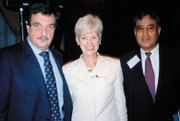
Still, Chilean officials think the opportunities in other areas can only grow stronger when the pact goes into effect Jan. 1, 2004. The country’s vice minister of foreign affairs, Cristian Barros, was in Los Angeles on Sept. 4 during World Trade Week. Barros took part in a symposium attended by a delegation of 55 Chilean companies representing various industries, including textiles and apparel.
The event, hosted by the Los Angeles Area Chamber of Commerce at the Millennium Biltmore Hotel in downtown Los Angeles, featured a promotional film about Chile’s assets—including its beaches, rivers, wineries and agricultural land––and various speakers from trade organizations.
“Trade between the U.S. and Chile is very small, but that’s where the opportunities lie,” noted Hugo Lavados, director of ProChile, the Chilean Trade Commission formed to promote business in the South American country.
Exports accounted for 27 percent of Chile’s GDP last year, and imports made up 26 percent. Produce, fish and forestry products account for nearly half of Chile’s exports. Apparel and textiles, at about 2 percent, are way down on the country’s export list.
That may not be enough to attract the world’s clothing and textile producers, but Chilean officials were promoting the potential to boost apparel production in their country.
Lavados said Chile is the Latin American leader in terms of safety and ethical working environments and has had a stable history of democratic leadership.
The country has already established free trade with Mexico and Canada and is negotiating with South Korea and Bolivia. It has also started talks with Japan.
Barros said Chile’s appeal does not necessarily have to be linked exclusively to labor costs. There are other advantages.
“Chile can be a platform to do business with other Latin American countries,” he said. “We have a strong economic goal and history of sustained growth. We have to take the challenge that this free-trade agreement brings to us.”
Juan Sebastian Garib of men’s suit producer Hitega S.A., in Santiago, Chile, agreed that the free-trade pact would not have a dramatic effect on the apparel and textiles sectors. Nevertheless, he was at the symposium inviting California companies to work with his 60- year-old business.
“It’s almost impossible to compete with countries like India and China,” he said. “But with our designs, we’re getting a space in the market.”
Garib said there are only a few men’s suit manufacturers left in the Santiago market, which has been hit hard by Asian imports recently.
“The cotton business is dead here now,” he said. “Apparel has only 2 percent of the GDP. Ten years ago it was 8.5 percent. We’ve been able to compete by investing in state-ofthe- art equipment and concentrating on our designs. We have about eight designers aboard, and it’s helped.”
Added symposium speaker Jer r y D’Amore, owner of Driscoll Strawberry Associates Inc., a Watsonville, Calif., company that buys blueberries from Chilean farmers: “Chile is a lot bigger than everyone realizes. There are opportunities for a dynamic crosscultural partnership. But you have to have a good idea and some trust and do some hard work to make it work.”