Real Estate Burdens Grow for Apparel Wholesalers, Landlords

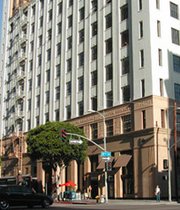
It was not so long ago that real estate in the Los Angeles Fashion District was an easy sell. But with the economic downturn during the second half of 2008, real estate has become a major expense burden, especially for those who locked in on high rates based on strong demand at the height of the market.
Spaces that have been sold out for years are becoming vacant. And it’s affecting all levels, from wholesale showrooms to retail and even residential properties.
Santee Village, downtown Los Angeles’ largest adaptive reuse residential/commercial project, developed by MJW Investments, was turned over to its lender, Darien, Conn.–based The Patriot Group, recently. The 780,000-square-foot multi-phase project was nearing completion, but sales have slowed over the past few months, just as they have across the country.
“We voluntarily let The Patriot Group take over the partnership,” said MJW President Mark Weinstein. “There were some disagreements over the handling of [Santee Village].”
Weinstein said the downtown residential market is turning toward rentals. Projects such as the Chapman Building have switched from for-sale units to rentals. “There’s still demand for rentals. It’s an interesting time. We are kind of in a holding pattern. There’s lots of negativity out there. People need to stop thinking negative,” he said.
Another downtown Los Angeles project, the Rowan Lofts at Fifth and Spring streets, saw 90 of 120 pre-sales fall through, so the developers will soon auction off all remaining units to the highest bidders.
“It’s a trickle-down effect,” said Steve Needleman, principal of ANJAC Fashion Properties, which maintains more than 1 million square feet of property in Los Angeles. “It trickles down from the retailers to the manufacturers, suppliers and contractors. It’s across the board. No one is not feeling it.”
Needleman’s fashion buildings house contracting businesses such as pattern-making and sample-making studios, design studios, and small cut-and-sew operations. Needleman also owns the Orpheum Theatre and the Orpheum Lofts on Broadway.
Initially, the Orpheum Lofts leased up quickly. Now, there are a few vacancies. When the project opened about three years ago, the downtown residential boom was in full swing. But with higher barriers to financing, along with rising unemployment, move-ins have slowed.
“I still believe in downtown. It’s a great place to live,” Needleman said. “All these units will fill up as the price levels drop off. You will probably see more rentals coming on board.”
Apparel-industry workers are reacting in different ways to deal with real estate expenses. Over the past few months, subleasing has come into vogue. Because many wholesalers are locked into long-term leases, they have opened up their spaces to others to split costs. Most of the landlords in the Fashion District allow such activity as long as they get the final say.
“Before approval, we normally review the line and merchandise to make sure that it is appropriate for that particular floor or wing,” said Deborah Levine, spokesperson for the California Market Center, who has seen several showrooms subletting space.
Among those who have joined forces are Lisa Lenchner and Joey Miller, both of whom owned separate showrooms on the third floor of the CMC. Lenchner moved from the A building into Miller’s B-building showroom as a way to share resources, lower each other’s rents and weather the tough economy.
“The economy is tough right now. By sharing expenses, we can make more money,” Lenchner said. “We had to be careful that there were no conflicts. For example, I have a denim line and he does not. He has categories that I don’t have. They complement each other.”
Miller also has a digital-printing operation that allows the showroom’s customers to order promotional and custom clothing and accessories. One customer placed an order for tote bags featuring images of her store.
“I think we are going to see more of these ’partnerships’ this year,” said another showroom owner.
The downturn in the real estate market has yet to hurt the major players in The Intersection—the wholesale-showroom buildings at the corner of Ninth and Los Angeles streets—to a big degree.
“The CMC is faring decently well in this economy. We have had a few tenants who have left the building due to downsizing or [companies that] went out of business. However, we are still signing new leases every month,” Levine said. “In fact, between December 2008 and January 2009, which are normally slow months under normal circumstances, we have 10 new leases signed,” she said.
The true test for the CMC will come this summer, when its new Area 4 contemporary showcase debuts on the fourth floor. With many economists projecting a prolonged recession lasting into 2010, manufacturers and wholesalers may not be ready for new real estate investments, but CMC officials are hoping that a modernized show place will draw interest.
Currently, even the most in-demand showroom spaces in the Los Angeles Fashion District have felt the pinch. For the first time in months, the Cooper Design Space was left with vacant space after a recent spate of “restructuring” from tenants, said Director of Leasing Mona Sangkala. She was able to fill the empty space fairly quickly but is not sure it won’t happen again.
“It’s a day-to-day thing right now. Everybody’s being careful,” she said.
The Gerry Building, located on Los Angeles Street, is trying to reinvent itself for the second time. When the market was hot, the Gerry’s owners, Hermosa Beach, Calif.–based LaeRoc Funds, attempted to turn the building into for-sale commercial condominiums. Shortly thereafter, the credit markets tumbled, and now LaeRoc is back leasing showrooms—with a twist, however. It recently hired Daum Commercial Real Estate Services to handle leasing and market the spaces as showrooms that can be converted into live/work units. The building is about 40 percent leased. Rates range from 75 cents to $1.65 per square foot.
Despite the downturn in the real estate market, most landlords have not adjusted their rates. Needleman said his were already low and he has not changed them. Other building owners were not quoting rates.
In other cities, rising vacancies are forcing building owners to take more drastic steps. In San Francisco, the San Francisco Giftcenter and Jewelrymart will soon be scrapped in favor of office space. The nearly 400,000-square-foot complex, located in the city’s SOMA district, houses gift, clothing and jewelry vendors. Owner ScanlanKemperBard Co. (SKB) of Portland, Ore., thinks it can get better lease rates from office tenants. Plans are to convert the Giftcenter area into creative office space. The current wholesale market area is only 70 percent leased. SKB also plans on turning ground-level units into retail space.