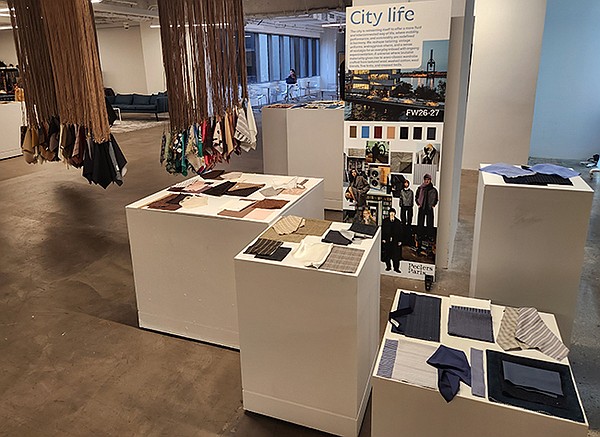
The LA Textile Show afforded an array of resources to support fashion creatives' decision making as they plan their collections.
TRADE SHOW REPORT
CMC Hosts LA Textile Show as Creatives Seek Sustainable Domestic Options
Designers and fashion creatives traveled to downtown Los Angeles Oct. 7–9 for the LA Textile Show at the California Market Center. Attendees were looking to take in the event’s development, sourcing, manufacturing and educational offerings through daily trend presentations, seminars and panel discussions.
Many of the show’s attendees visited from Southern California as well as Washington, Oregon, Hawaii, Nevada, Arizona and Utah, according to Roxane Mirtolooi, LA Textile Show manager. Creatives also attended the show from the Midwest and East Coast of the United States in addition to Brazil, Canada, Indonesia, Italy, Japan, Kuwait, Nigeria, Pakistan, Peru and Vietnam.
“We have worked hard to curate the LA Textile Show as a one-stop destination filled with elevated resources for designers and apparel brands, so to see people coming from around the world to a regional trade event reinforces the value that LA Textile has brought to the industry over the past 32 years,” Mirtolooi said.
Sustainability remains top of mind while domestic manufacturing grows
In addition to exhibitors representing the global textile and manufacturing industries, LA Textile also organized targeted areas highlighting The European Collective, Made In Japan Spotlight and Turkish Textile Pavilion. While these pavilions highlighted specialties of international textile destinations, the event also increased its domestic resources.
“A key feature that garnered some attention at the October edition was our increase in U.S.-based companies within the show,” said Mirtolooi. “A lot of attendees were looking to source materials domestically in light of the international tariffs, so it was nice to have a variety of local options for them to source from like Laguna Fabrics, Asher Fabric Concepts, Flextex, SAS Textiles, Carr Textile Corp. and a few more.”
According to Theresa Aguilar, accounts manager with downtown Los Angeles manufacturer Fashion Frankie Inc., local California designers, in addition to visitors from Arizona, Florida and New York, sought nearshoring options to develop and create their collections.
“Despite the struggles that have happened in the country, it’s brought a lot of work back to downtown L.A., and it’s been great for us on our end because we do things locally,” Aguilar said. “People are seeing the benefit from producing here in the U.S.”
As tariffs have risen, so have concerns that sustainability initiatives in fashion would take a back seat to cost. At the Laguna Fabrics booth, Sherry Wood, director of merchandising and design, noted that her offerings in domestically made textiles are ticking high due to the company’s sustainable commitments aligning with continued demand for responsible sourcing.
“In the active-athleisure trends, a lot of people that were using synthetics or a blend are moving away to cotton. Sustainability is still important. They are moving into organic cotton, recycled cotton or regenerative cotton,” Wood said. “The consumer is more aware of microplastics and other environmental aspects to synthetics.”
At NellyRodi, Jacqueline Rumohr, managing director, was helping to guide attendees through the consulting firm’s resources, which support designers to work efficiently as they seek to monitor costs.
“They were interested in the color direction. We offer different editions,” said Rumohr. “Since our agency focuses on collective beauty, fashion, home and consumer insights, we have a main color book that we call ‘Color Intelligence,’ which tends to tick all the boxes if you have a limited budget or need.”
Educational programming guides attendees into 2026
The show’s seminar and discussion programming ran during the entirety of LA Textile. Scheduled sessions included presentations and talks covering trends, manufacturing, branding, responsible sourcing and sustainability.
Topics included “Sense and Sustainability: Eco-Friendly & Ethical Decisions for 2026” featuring panelists Karri Ann Frerichs, founder of Circular Fashion LA, and Emmanuelle Rienda, creative director, ethical luxury expert and founder of Vegan Fashion Week and the Ethical Luxury Group; “Designing Responsibly: Where AI Meets Sustainable Fashion,” moderated by Tirsa Parrish, co-founder of Fashion Index, and featuring Mark McNaught, president of private-label company SeaOceanS, and Ram Sareen, founder and CEO of Tukatech; and “The Future of Textile Waste Recovery in LA” with Mariam Panasyan, an environmental engineer with the Los Angeles Department of Sanitation & Environment; Glynn Barrish of Rag Royalty; and Manny Jackson, founder of Thread Haus.
Michael Knox, a jewelry designer who is expanding his Los Angeles—based Hy Studio brand into apparel, found the sessions valuable—specifically the “Designing Responsibly: Where AI Meets Sustainable Fashion” panel.
“There are a lot of people that use AI for design, and you can tell they used it, which is discouraging and you lose interest. The way [the panelists] are using it is 10 times better and the way it should be used especially for a sustainability factor,” said Knox. “Exploring more of the fashion world to see what’s out there and how to use sustainability is very interesting.”