INDUSTRY FOCUS: SUSTAINABILITY
Moving Fashion Into the Next Generation of Sustainable Production
Fashion is moving forward from thinking of responsible, sustainable apparel development as a goal that pulls only from nature. Minimally processed natural materials and production practices that rely on cleaner output with fewer negative environmental impacts are foundational components of making sustainable clothing. Moving forward, the industry will rely on scientific discoveries and technological innovation to push through boundaries and enhance the capabilities of nature.
Brands and designers are working with partners who have explored how science and technology can keep fashion clean and honest and have brought about the innovations that have promoted progress in apparel sustainability. Fashion is becoming smarter, more agile and technologically advanced from farm to sales floor thanks to brands and designers who are taking greater responsibility and their partners, who are developing innovation that supports an evolution toward sustainable apparel-making processes.
California Apparel News asked apparel sustainability experts: How are companies blending nature with technological tools to advance sustainable progress in fashion?

Daren Abney
Executive Director
U.S. Cotton Trust Protocol
Fashion brands are going beyond trendy buzzwords to embrace sustainability, leveraging partnerships between nature and technology, beginning with practices right where the cotton fiber for our clothes begins—on the farm.
Precision agriculture tools like GPS and variable-rate application technologies were adopted on 91 percent of Trust Protocol growers’ fields based on soil type, plant needs and rainfall. Growers also continue to adopt regenerative agriculture practices, which focus on restoring and enhancing soil health and ecosystem vitality. Adding cover crops after harvest, for example, helps prevent soil erosion, improves water-quality infiltration and contributes to carbon sequestration. Promoting biodiversity above and below ground through practices like setting aside land for conservation areas can benefit important beneficial insects such as pollinators and increase soil microbes, which enhance ecosystem resilience and natural pest control.
The Trust Protocol acts as a tool to verify these on-farm efforts, measuring outcomes like improved soil health, and translates them into aggregated, quantifiable data. This empowers brands to move beyond broad sustainability claims, backing them up with proof.
This is further advanced through a new pilot to bring Trust Protocol Regenerative Cotton to market via a Field Partner Program created to meet the growing brand demand for regenerative cotton. It’s verification process combines field visits with satellite imagery to formally recognize growers’ regenerative practices.
This comprehensive approach provides fashion brands with more than just sustainable cotton; it gives them access to verifiable data that prove how technology is being used to actively support the environment.

Jaffar Ali
Manager of Digital Marketing and Communication
Sapphire Finishing Mills
Fashion’s real progress comes when natural materials and modern tools work together. Fibers like cotton, linen, hemp and Tencel offer renewability, while technology makes them smarter. 3D design reduces sampling waste, new dyeing methods save water, and advanced weaving adds durability without heavy synthetics.
But materials and processes are only part of the story. The industry is also being measured against Scope 1, 2 and 3 emissions, energy use, and transparency across the chain. At Sapphire Finishing Mills, we’ve taken that seriously by rethinking how we power our facilities, treat water and source energy. For us, compliance isn’t a box to tick, it’s a way to move toward more-responsible manufacturing, cutting impact at the source while still creating fabrics and apparel people want to live in. That balance of nature, technology, and responsibility is how we see endless possibilities taking shape.

Mary Ankeny
Vice President, Product Development and Implementation Operations
Cotton Incorporated
Sustainable prog-ress in fashion is being driven by technology that enhances rather than replaces nature’s own circular systems with cotton, providing powerful examples throughout the product life cycle.
At the manufacturing level, innovation is tackling the use of harmful forever chemicals. New research supported by Cotton Incorporated shows how technology can transform cottonseed oil, a natural coproduct, into a high-performance, sustainable fabric finish. This process creates an alternative to formaldehyde and PFAS using a part of the cotton plant itself to make fabrics water-repellent plus wrinkle- and oil-resistant. The research shows the potential to replace petroleum-based and formaldehyde-containing chemicals in common textile finishes.
This synergy extends to the very end of a garment’s life. Another recent report shows how a special high-tech composting process can turn cotton textile waste into a powerful climate solution. It breaks down almost all of the cotton and produces two valuable outputs: first, a pure form of CO2 that is far easier and more efficient to capture and store permanently, and second, a high-quality compost that can be used to enrich farmland. In short, it turns old cotton clothing into a way to actively keep carbon from the atmosphere.
By using technology to unlock the full potential of a natural fiber like cotton from the start by creating textile products and processes from the entire plant to capturing carbon from textile waste at the end, the industry is building a truly circular model for fashion.
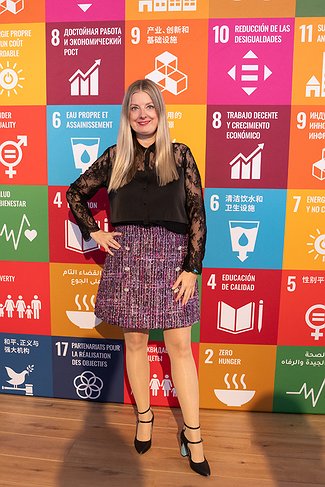
Kerry Bannigan
Co-Founder
UN Fashion & Lifestyle Network
President of the Board
PVBLIC Foundation
At the United Nations Fashion and Lifestyle Network we see members reimagining materials and processes, where the convergence of nature and technology is shaping one of the most powerful frontiers in sustainable fashion. This approach goes beyond reducing harm and instead fosters regenerative solutions that align fashion with planetary health.
TômTex, for example, uses biofabrication to transform mushrooms and waste streams into leather-like textiles, offering scalable alternatives to resource-intensive materials. Banofi Leather upcycles banana-crop waste into durable fabrics, demonstrating how agricultural by-products can become high-value inputs. Cellsense contributes to this movement with smart bio-based sensors that monitor fabric performance and life cycle, extending product longevity and reducing waste. EcoaTEX applies ecological processing methods that conserve water and reduce chemicals, bridging natural efficiencies with technical precision.
At the 80th United Nations General Assembly, the Network highlighted these innovations, showing how creativity, culture and science can accelerate the transition to a circular fashion system. Additionally, Network member Mara Hoffman emphasized that circularity must be embedded at the moment of design, with responsibility woven into creativity from the start. These examples illustrate that blending nature with technology is not a trend but a pathway to systemic transformation.

Oya Barlas Bingul
Senior Manager, Business Development and Marketing
TextiMag
The fashion industry is under increasing pressure to reduce its footprint while still delivering performance and creativity. What encourages me is how many companies are now turning to nature for inspiration and pairing it with technological tools to make genuine progress on sustainability.
Nature has always been an innovator. From the self-cleaning properties of lotus leaves to minerals that absorb odors, biological processes offer solutions that are both efficient and resourceful. Translating these mechanisms into textiles can extend garment life, reduce care requirements and minimize environmental impact.
This is where I see real potential: innovations that don’t simply claim sustainability but embed it into everyday use. TextiMag, for example, draws on natural mineral adsorption to neutralize odors without added chemicals. By reducing the need for frequent washing, it helps conserve water and energy while keeping garments fresher for longer. It’s a small shift with a measurable effect and exactly the kind of practical sustainability the industry needs.
Blending biology with technology isn’t about short-term fixes or marketing slogans; it’s about rethinking how textiles are designed, used and cared for. It means respecting nature’s limits, learning from its strengths and scaling solutions through innovation.
For me, this is where sustainable progress in fashion truly lies—at the intersection of natural intelligence and human ingenuity, where performance and responsibility can move forward together.

Karen Beattie
Global Director of Product Management
Polartec
Companies are advancing sustainable progress in fashion by blending nature-inspired materials with cutting-edge technology. Polartec, a distinguished Milliken brand, uses plant-based and recycled fibers—like Biolon nylon from renewable sources and fabrics made from post-consumer plastic bottles—to reduce environmental impact. Our technical innovations, such as Power Air insulation, minimize microfiber shedding in home laundering, and our barrier technologies enable designing for circularity.
By designing products for durability and circularity and eliminating harmful chemicals ahead of regulations, we’re setting new standards for manufacturing processes designed with sustainability in mind. This holistic approach—combining natural resources and advanced science—helps create high-performance textiles that support a more sustainability-minded future for fashion.

Meredith Boyd
Chief Product Officer
UNIFI, makers of REPREVE
At UNIFI, we continuously innovate with a focus on environmental sustainability and product performance. Through the REPREVE platform, we have the world’s most recognizable brands of environmentally preferred fibers and insulation. Reusing waste as the raw material, REPREVE polyester has avoided over 1.47 billion kilograms of greenhouse-gas emissions and conserved more than 7.2 billion gallons of water versus virgin polyester products. This empowers our protection of our natural resources.
Recently, UNIFI launched a new plant-based technology, A.M.Y. Peppermint, a naturally deodorizing yarn engineered for long-lasting freshness. The latest innovation, which can be combined with our REPREVE polyester, delivers built-in odor control using sustainably sourced peppermint oil, offering a botanical alternative to traditional antimicrobial treatments for textiles.

Laura Corna
Sales Manager
NextPrinting
In our vision, nature is not simply a tool. It is an ecosystem to be preserved, a finite resource that demands responsibility. That is why, at NextPrinting, we harness technological progress to minimize our impact on the environment and on natural resources. For us, combining nature and technology means beginning with the selection of the most sustainable materials, choosing efficient processes, and developing solutions that reduce waste and consumption throughout the entire supply chain.
Our digital fabric-printing technology makes it possible to achieve highly realistic visual effects while using significantly less water, energy and chemicals than conventional methods. We work with certified yarns and fabrics—GOTS, GRS, FSC—and promote flexible, on-demand production that prevents overproduction and gives value to every piece. Digital printing enables brands to design, test and produce collections more quickly, creatively and responsibly, aligning production with real market needs. This approach reduces waste, strengthens traceability and integrates sustainability and aesthetics into a single coherent vision.

Paola Corna
Chief Financial Officer, Sustainability and Human Resources Manager
ACM
Technology is becoming increasingly accessible to small and medium-sized enterprises and, thanks to growing digitalization, companies like ACM can now make use of tools that were once the exclusive domain of large industries. Energy-management software, resource-monitoring platforms and predictive systems help optimize consumption, lower operating costs and improve production efficiency. Low-impact technologies applied to logistics, design and customization also reduce waste and allow production to be adapted to actual demand, supporting a more circular model. The future of sustainability is closely linked to technological innovation. Essential solutions such as artificial intelligence and the Internet of Things enable the introduction of smart sensors and automated processes for real-time consumption monitoring, ensuring greater accuracy and timeliness in operational decisions.
At the same time, collective awareness of the importance of social and environmental responsibility is increasing, pushing the fashion industry toward production models that are more ethical, transparent and efficient. In this context, ACM stands out for its concrete and forward-looking approach. As early as the 1990s, the company implemented a complete water-treatment and recycling system, achieved energy independence through solar power systems and obtained certifications such as GRS and WeImpactIndex. On the creative side, it experiments with natural, regenerated and recycled materials, promoting an aesthetic that highlights waste and resources while respecting the environment.

Eric Davidson
Director, North America Brands and Retail
The LYCRA Company
Fashion is leveraging nature and technological advancements today, and our new bio-derived LYCRA EcoMade fiber is a great example of this shift. Instead of relying on fossil fuels, we’re using dent corn—mostly grown in Iowa—as the starting point and fermentation as the key technology. It’s a smart and sustainable way to blend nature and science.
What’s exciting is that this approach lets us replace a finite resource with something renewable, and we expect it could cut greenhouse-gas emissions by up to 44 percent, all while keeping the same stretch and shape retention people love in LYCRA fiber.
As more consumers look for sustainable options, we’re helping the industry move toward renewable inputs by offering transparency around where our raw materials come from. Our bio-derived fiber works seamlessly with existing fabrics and processes—no need to reengineer anything. It’s already compatible with our performance fiber products like LYCRA ADAPTIV and LYCRA XTRA LIFE.
From farm to fashion, bio-derived LYCRA EcoMade fiber is a compelling example of how natural inputs like corn and cutting-edge biotechnology can come together to help drive sustainable innovation at scale.

Claudia de Witte
Marketing and Sustainability Director
Eastman Textiles
Naia Renew is a circular fiber sourced from 60 percent sustainably sourced wood pulp and 40 percent GRS-certified recycled content. By combining renewable inputs with advanced recycling, it shows that circular fashion can be both scalable and traceable, meeting environmental and performance standards. To further reduce reliance on virgin resources, we developed Naia Renew ES, a fiber sourced from 60 percent certified-recycled content, including 40 percent hard-to-recycle waste materials transformed through molecular recycling and 20 percent certified-recycled cellulose combined with 40 percent sustainably sourced wood pulp.
This innovative material offers a luxurious alternative to silk with a significantly lower carbon footprint, making it ideal for premium applications. Through our partnership with TextileGenesis, we embed digital traceability across the value chain, giving brands and retailers verified insight into material origin and sustainability performance.
Naia fibers are produced in a closed-loop system with safe and environmentally sound chemical use and are backed by third-party certifications such as OEKO-TEX STANDARD 100 and TÜV AUSTRIA for biodegradability and compostability. By combining renewable sourcing, circular inputs and digital traceability, Naia empowers brands to deliver fashion that honors both people and the planet.
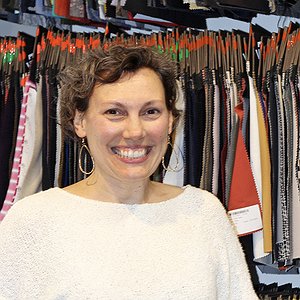
Betsy Franjola
President, BFF Studio
Founder, PREFACE
Chief Executive Officer, Hocking Hills Garment Center
At BFF Studio, we’re seeing a dynamic blend of nature and technology driving sustainable innovation in fashion. Cellulosic fibers like Tencel and Naia offer performance benefits such as absorption and moisture movement, while new developments layer in botanicals like mint, ginger and aloe to harness their natural antimicrobial, cooling or warming effects. These advancements show how science and nature can work together to create textiles that are not only more sustainable but also deliver enhanced function and comfort for the wearer.
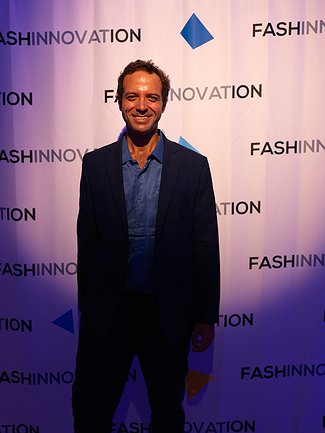
Marcelo Guimarães
Founder
Fashinnovation
The future of fashion is in the connection—nature and technology working side by side.
At Fashinnovation, we see this happening every day, from AI tools that reduce overproduction to biodegradable fabrics grown in labs. Fashion brands are using digital design to avoid waste before the first thread is even cut. Others are using blockchain to trace natural fibers back to farmers, ensuring fair practices and real transparency.
But real progress happens when tech doesn’t replace nature, it protects it. Sustainability is no longer a trend. It’s the new standard. And tech is helping us scale what’s natural, local and circular on a global level. One innovation at a time.

Jan Hilger
Head of Business Unit Textiles and Apparel
Livinguard Technologies AG
Livinguard Technologies uses microencapsulation of nature-based active ingredients such as essential oils and herbal extracts that are then released in a controlled manner over time through friction and diffusion. This approach provides similar functional performance and durability as established alternatives but through safer, more-natural ingredients.
The goal of Livinguard is to empower consumers to make every moment carefree and every choice responsible. The brand’s promise of “Feel better. Do better” highlights this unique value proposition of providing lasting value-added functionality through technologies that make more-responsible choices for consumers effortless. Livinguard’s portfolio of nature-inspired textile effects based on this technology include:
• Better Cool, which uses micro-encapsulated menthol-based actives;
• Better Repel, which relies on micro-encapsulated proprietary blends of citronella and herbal oils to provide insect repellence against mosquitos, bed bugs and mites;
• Better Scent, which uses micro-encapsulated natural ingredients like rose, citrus and clove; and
• Better Vitality, which offers controlled delivery over time of tailor-made formulations of natural-based active ingredients such as lavender, aloe vera, tea tree and vitamin E.

Dr. Cindy J Lin
Co-founder and Chief Executive Officer
Hey Social Good
Algae and mushrooms create fantastic alternatives to plastics. Our increasing understanding of the negative health and environmental impacts of plastics in everything we wear and everything we place our food in has finally hit the mainstream. This is a great and amazing opportunity for innovation. It will also lead to a true circular economy when we have entrepreneurs, investors, companies and public entities that are starting to think about how to incorporate alternative and nature-based materials into the things we wear and use.
Some fantastic examples include companies like Vollbak, Sway and Algaeing, who use algae to make environmentally preferred fibers, packaging and natural dyes. To replace chemical-based inks, algae ink is used for clothing printing and other dye and printing needs. Other companies are looking into combining biopolymers with algae to make soft and highly breathable fabrics. In packaging, seaweed and algae are used to produce packaging that’s biodegradable and, in some cases, edible; think of sauce packets! Instead of petroleum-based plastics like Saran Wrap, algae films are used for food wraps or carrier bags so we can reduce microplastics getting into our food. Our future will be brighter when we incorporate nature-based solutions into technology that fuels our everyday outfits and meals.

Steve McCullough
Event Vice President
Functional Fabric Fair
Companies are making real strides—mills and suppliers are turning to renewable and recycled materials like organic cotton hemp and bio-based fibers while adopting tools that improve efficiency and reduce waste.
At Functional Fabric Fair, we see this accelerating each season. Through our partnership with the Future Fabrics Expo, we’re spotlighting the next generation of suppliers with breakthrough innovations like inkjet technology powered by living fungi and bacteria that create regenerative, compostable print media; biomaterials forming textiles from plants cultivated in regenerated wetlands; enzymes capable of breaking down blended fibers into their original building blocks; and more. While these solutions represent different levels of commercial readiness, they collectively point to where the industry is heading.
Consumers expect products that perform while aligning with their values, and the industry is responding. From waterless dyeing to biodegradable fibers and textile recycling, the tools are here to scale responsible practices. The future of fashion lies in harnessing both nature and technology and working together to deliver performance and sustainability.

Emmanuelle Rienda
Creative Director
Ethical Luxury Expert
Founder of Vegan Fashion Week
The future of fashion lies in a symbiosis between nature and technology. What we’re witnessing is not just material innovation but a cultural redefinition of luxury itself. Designers are drawing inspiration from natural systems while using AI, bio-fabrication and digital prototyping to radically reduce waste and rethink production. At the same time, regenerative agriculture and plant-based alternatives remind us that true progress means giving back more than we take. When fashion aligns technological intelligence with the wisdom of ecosystems, we create beauty that is not only desirable but ethical and deeply relevant to the times we live in.

Dr. Anna Sammarco
Senior Director of Business Development and Strategy
Circulose
As climate urgency intensifies and overproduction continues to plague the industry, fashion’s sustainability efforts are at a critical crossroads. True transformation hinges on a shift away from linear, waste-heavy models toward fully circular systems that regenerate rather than deplete.
Today, a new generation of innovators is blending nature-based solutions with technological tools to accelerate this change and reshape fashion from the inside out:
• Regenerated materials like Circulose convert worn-out cotton into cellulose pulp that can be spun into new fabric. The next-gen recycled textile material is available at industrial scale and already being adopted by major brands like H&M, Zara and GANNI;
• Mycelium-based leathers, for example Forager by Ecovative, offer plastic- and animal-free alternatives grown from mushrooms;
• Seaweed-derived yarns and algae-based dyes developed by innovators like AlgiKnit and Colorifix are reducing environmental impact;
• AI-powered demand forecasting, 3D-design tools and digital sampling are helping brands design smarter and waste less;
• Blockchain and digital product passports via platforms like Eon and Provenance are powering transparency, enabling recycling and resale through traceable material identities; and
• Waterless dyeing innovations, including CO2 dyeing and digital pigment printing, are slashing water usage and chemical runoff.
Business models built around resale, rental, repair and product longevity through platforms like The RealReal, ThredUp and By Rotation are extending the life of clothing.
Circulose is proving that scalable circular materials are possible and that fashion is beginning to shift from extractive to regenerative, from wasteful to intelligent. The future of fashion won’t be simply sustainable; it will be circular, connected, and designed to evolve.

Andrea Venier
Managing Director
Officina39
In the collective imagination, chem-
istry is often perceived as being at odds with nature. Today, how-ever, thanks to a sustainable and innovative approach, chemical technologies can be a powerful ally in protecting the environment and human health. In the fashion industry in particular, the integration of science and nature is driving a profound shift toward more-responsible production processes. For years, Officina39 has been demonstrating that performance and ecology can coexist. A concrete example is ZeroPP|ALL.IN, the system developed by Officina39 to permanently replace the use of potassium permanganate, a toxic substance widely used in denim finishing to create vintage and corrosion effects at low cost.
Until now, finding a viable alternative had been a major challenge for the industry. Officina39 has finally developed a unique and innovative product that can be applied directly to raw garments, replacing PP from the very beginning of the process. This is not only about taking something away but also about rethinking the entire process. The innovation lies in a significant simplification that makes it possible to complete the entire workflow directly on raw garments with a single product, making the system more accessible, efficient and sustainable than ever. ZeroPP|ALL.IN is the outcome of scientific research, environmental responsibility and collaboration with brands and manufacturers.
It demonstrates that nature and technology can coexist and, more importantly, technology can serve as a means of protecting nature when guided by shared values and a sustainable vision of the future.

Matteo Vivolo
Chief Sales Officer
Vivolo
Fashion companies are adopting circular business models to advance sustainable progress. They are developing and using new materials that bring together the qualities of natural fibers with advanced technological processes. Production processes are being optimized to increase efficiency and reduce environmental impact by lowering water, energy and chemical use.
Artificial intelligence and machine learning, for example, analyze sales data to forecast demand with greater accuracy and help prevent overproduction, one of the industry’s biggest sustainability challenges. Companies are also investing in transparency and traceability through blockchain technology, which makes it possible to follow a product’s entire life cycle from raw material to finished garment. They also seek certifications that verify compliance with standards recognized nationally and internationally.
True innovation in the fashion industry lies in skillfully combining nature with technology, turning environmental challenges into opportunities for growth and progress. At Vivolo, we have been pursuing this opportunity for many years, beginning when President Luciano Vivolo cut patches from leather scraps to repair his eldest son’s tracksuit.

Kevin Vranes
Chief Product Officer
Worldly
Sustainability progress in fashion cannot be achieved through technology alone. Innovation must begin with an understanding of the natural systems on which our industry depends—from water basins that nourish cotton fields to the workers whose well-being is shaped by heat and climate.
If technology is built without considering the limits and needs of nature, we risk creating solutions that are efficient on paper but ineffective, or even harmful, in practice. True progress requires tools that preserve, protect and enhance the planet, ensuring that business growth aligns with ecological and human resilience.
This principle guided the creation of Worldly Axion, our new risk intelligence solution. It combines trusted facility-level sustainability data with insights from dozens of environmental datasets—including grid decarbonization rates, water stress and climate projections. By contextualizing supply-chain performance within nature’s realities, companies can focus on where action will have the greatest impact. For example, sourcing teams can see the regions that face water insecurity, where renewable energy is most available or how heat stress may affect worker productivity—and support supply-chain partners in those areas before those risks become disruptions.
This is how technology and nature must intersect, not as opposing forces but as partners. The future of fashion depends on innovation that recognizes the planet as its most critical stakeholder, ensuring that progress is measured not only by output but by the resilience and health of the natural systems that sustain us all.

David Williamson, PhD
Chief Executive Officer
Modern Meadow
As awareness of climate change intensifies, the fashion industry faces growing pressure to adopt more-sustainable practices. Yet many so-called sustainable materials require costly new infrastructure and often compromise on performance, beauty or scalability.
Modern Meadow is addressing this challenge head-on through advanced material science. The company has developed INNOVERA—a next-generation, leather-like biomaterial designed to make sustainability seamless for the fashion industry.
Inspired by bio-mimicry, INNOVERA emulates the structure of collagen—the protein responsible for leather’s strength and flexibility—using plant-based proteins, biopolymers and a textile backing made from recycled rubber sourced from end-of-life car tires. The result is a completely animal-free material that matches the performance of traditional leather yet is twice as strong, significantly lighter and luxuriously tactile in both look and feel.
With over 80 percent renewable carbon content and a design built for circularity, INNOVERA can be broken down and reused as feed stock to produce new material—supporting closed-loop production. Better yet, it is drop-in ready, enabling tanneries to integrate INNOVERA into existing workflows without new machinery or disruptive investment. This allows them to bypass resource-intensive steps while creating innovative, animal-free products across accessories, interiors and beyond.
With nature-inspired innovation at its core, Modern Meadow is helping fashion move forward—delivering sustainability without sacrificing style, function or emotional impact.
Responses have been edited for clarity and space.