INDUSTRY FOCUS: FIBER, YARN AND FABRIC
Import Scares, Supply-Chain Snares—How to Navigate Tariff Uncertainty
The Trump administration’s April reciprocal tariff announcement and pause, followed by delayed implementation with trading partners such as China, which is now scheduled for November; negotiated tariffs on some, such as 15 percent for the European Union; and high figures for others, including a 50 percent rate for India and Brazil, have caused uncertainty for many industries including apparel. This includes domestic brands whose goods are made in the United States but rely on foreign components.
These challenges have led decision-makers in the fiber, yarn and fabric industry to develop strategies that will mitigate pressure on the apparel business. At the heart of these solutions are commitments to increase diversification, innovation and collaboration in order to fortify the industry and maintain relationships.
California Apparel News asked experts in fiber, yarn and fabric: How have you navigated through proposed and implemented tariffs that impact your business from raw materials to finished goods?

Bob Antoshak
Vice President of Strategic Global Sourcing and Development
Grey Matter Concepts
Tariffs aren’t a crisis, they’re just background noise—annoying, unpredictably persistent and something everyone shares. We treat them like the weather: Expect sun, pack for rain and don’t ignore the clouds. We price realistically, from yarn and trims to cartons and freight.
Our strength is supplier partners. Good suppliers act as co-strategists. Together, we adjust origin, tweak specs to reduce duty impact, split volumes, and manage timing to stabilize lead times and cash flow. We keep the books open and run scenarios that start at 10 percent and end at “let’s not talk about it—but we’re ready.” Customers don’t want drama; they want proof that the plan holds and the lights stay on.
We cut packaging to reduce weight and freight costs. We place larger upfront orders to unlock volume discounts while maintaining a streamlined production line, ensuring consistency and avoiding lost time spent chasing style changes. Everyone contributes, including us. We share costs across materials, margins, pack efficiencies and logistics so no single part breaks. Then we communicate clearly—what’s changing, why it’s fair and how service levels remain steady.
Tariffs come and go. Our job is to prevent them from controlling the story. With solid supplier partnerships, no one has to face challenges alone.

Sagee Aran
Chief Commercial Officer
NILIT
The key to managing a global business today is flexibility, both in how we operate internally and the alternatives we can offer our customer base. We have strengthened our cost structure across our global facilities through reduced logistics expenditures, energy savings and the reuse of internal waste as recycled material, helping us mitigate the impact of rising tariffs.
For our customers, NILIT’s worldwide manufacturing presence in Europe, Asia, the Middle East, South America and North America provides many options to manage fiber sources depending on a mill or brand’s specific circumstances. We collaborate to identify alternatives and work with customers to develop the right approach. Our knowledge of the global landscape and our ability to provide reliable, high-quality, sustainable Nylon 6.6 fibers from multiple countries can give customers the flexibility they need to navigate through uncertainty and change.

Mark D’Sa
Senior Vice President of Development
Panda Biotech
As an export-oriented business, we are directly impacted by tariffs. However, hemp holds a unique classification within the HTSUS [Harmonized Tariff Schedule of the United States] system: Apparel containing more than 50 percent hemp qualifies for a reduced tariff rate. This not only benefits brands and retailers but also provides a strong incentive for textile manufacturers to incorporate more hemp into their products.

Claudia de Witte
Marketing and Sustainability Director
Eastman Textiles
We are closely monitoring changes in tariff policies and adjusting our strategies to address the impact of tariffs on our customers as the supply chain in the textiles industry is global. The joint facility in China will enable a more agile and effective supply chain to serve the needs of customers and support mitigating the global tariff risk and exposure. It shows our Naia commitment to making sustainable textiles accessible to all. This new Naia yarn offers affordable eco-luxury with stronger sustainability than viscose and better ethics than silk. Thanks to its higher tenacity, this yarn enables entry into premium-lightweight-fabric markets where standard Naia cannot currently perform. This new yarn will be available for customers outside of China from Q1 of 2026.

Andrea Ferris
Co-founder and Chief Executive Officer
Intrinsic Advanced Materials and CiCLO Technology
At Intrinsic Advanced Materials, the company behind CiCLO technology, navigating tariffs has reinforced a lesson we already live by: Resilience comes from diversification and innovation. The apparel industry is deeply global, and any shift in trade policy can ripple from raw materials through to finished goods.
Rather than wait for political clarity, we’ve focused on building agility into our model. CiCLO technology is embedded at the fiber level, enabling synthetics to biodegrade if they end up in the environment as microplastic pollution, while retaining durability and recyclability of the fabrics. It integrates directly into existing polyester and nylon manufacturing, anywhere in the world, without requiring new infrastructure. This flexibility has allowed the technology to scale across regions and adapt as sourcing strategies evolve. CiCLO polyester and nylon staple fibers and filament yarns are now available in 22 countries.
We’ve also found that policy, whether tariffs or treaties, moves more slowly than the growing crisis of microplastic pollution. That’s why the industry must take the lead. Companies that diversify sourcing, adopt scalable innovations that are globally available and invest in circular design will be better positioned to weather trade disruptions while also tackling urgent environmental challenges.

James Huang
President
Kingwhale
Tariffs are no longer an anomaly—they’re the new normal in a world where trade, security and sustainability intersect. The real question isn’t how to dodge them but how to build models that thrive with or without them.
In the short term, we focus on what we can control: reducing costs through sharper operational efficiency, cutting waste and yield loss, and ensuring every resource is used wisely. Shipment optimization—consolidating volumes, rerouting flows and leveraging bonded zones—allows us to offset added tariff burdens with smarter logistics. At the same time, multi-country sourcing creates flexibility so no single tariff shift can paralyze our supply chain.

Marco Lucietti
Head of Global Marketing and Communications
RE&UP
At RE&UP, tariffs are only one of many global factors we need to navigate in building a truly circular textile value chain. Because our model is based on textile-to-textile recycling, we start with post-consumer and post-industrial waste rather than virgin raw materials. This helps insulate our business from some of the volatility caused by tariffs on commodities like cotton or polyester while also reducing exposure to fossil-based supply chains.
That said, we operate in a global industry where finished goods and intermediate materials move across multiple borders. Our approach has been to stay agile: diversifying our recycling and production footprint, developing modular technology that can be scaled in different geographies, and working closely with supply-chain partners to identify the most tariff-efficient routes. We also monitor policy developments closely, both in the U.S. and internationally, so we can anticipate—rather than react to—changes.
Ultimately, tariffs reinforce the urgency of building more-regionalized, -resilient and -circular supply chains. By turning local textile waste into high-quality, next-gen fibers that perform like virgin cotton and polyester, we help brands reduce dependency on imported virgin inputs while proving that circularity can also be a smart commercial strategy.

Chris Parkes
President
Concept III Textiles
We have been working with customers and continue to work with customers on the tariffs. The fabric mills continue to face challenges with labor, energy and testing costs, which have affected next margins. We are doing our best to help where we can, but as an industry we need to innovate to bring newness to the market. Brands that are presenting new product to the market have been able to increase prices to help offset some of the tariff costs, and this is being shared in some of the recent earning results versus those brands that are not.

Jillian Samis
Senior Vice President of Global Marketing and Design
Tefron Ltd.
At Tefron, tariffs and trade regulations are an ever-present factor in how we structure our business, from raw-material sourcing through to finished goods. Rather than viewing them as barriers, we approach tariffs as opportunities to build resilience into our supply chain and deliver consistent value to our customers.
One of the ways we’ve navigated proposed and implemented tariffs is by diversifying our manufacturing and yarn-sourcing footprint. Tefron operates across multiple regions—including Israel, Jordan, China, Vietnam, Romania and India—which allows us to shift production strategically and optimize costs while remaining agile. By not relying on a single geography we can mitigate tariff exposure and ensure business continuity for our partners.
In parallel, we’ve invested heavily in innovation at the fiber and fabric level. Our teams are working on new yarn blends and technologies that can be sourced at low tariffs or produced closer to the end market, reducing both cost volatility and lead times. This innovation-first mindset ensures we are not only solving tariff challenges reactively but also proactively designing smarter solutions for the future.
Ultimately, our focus is on being a trusted partner to global brands and retailers. By combining a diversified supply chain with continuous product innovation, we’ve been able to successfully navigate tariff shifts while keeping our core promise intact: delivering high-quality apparel with consistency and precision.

David Sasso
CEO
Genesis AdvanceTech Engineering
As a U.S.-based supplier of materials such as fibers, yarns, fabrics and trims—many of which are exported for use in finished goods manufactured in the Western Hemisphere—we find ourselves affected by the shifting landscape of global tariffs. The challenge lies in the fact that our exposure to tariffs is often dictated not so much by our own operations but by the final destination of our customers’ finished products in the Western Hemisphere. This creates a complex and often unpredictable environment.
From our perspective as a domestic manufacturer, the impact has been felt across several critical areas: disrupted cost structures, reduced order volumes, manufacturing-efficiency challenges, extended lead times, and compromised quality and material substitution.
Ultimately, the tariff environment has created a domino effect that begins at the brand and retail level, and cascades through every layer of the supply chain. It’s a frustrating and often helpless feeling—being subject to forces beyond our control while trying to maintain consistency, quality and competitiveness. Navigating this landscape requires constant vigilance, adaptability, and a willingness to rethink traditional sourcing and production strategies.
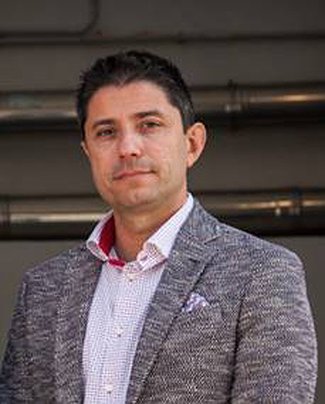
Andrea Venier
Managing Director
Officina39
In a global environment marked by economic uncertainty, geopolitical tensions and increasingly aggressive trade policies, companies must reassess their strategies. Shifts in trade policy can directly affect costs, supply chains, logistics and competitive positioning, pushing businesses to adapt in order to remain competitive. This climate of uncertainty generates market instability, influencing investor confidence and shaping expansion strategies.
While the tariffs under consideration by the U.S. government pose a complex challenge for European companies, those investing now in value, research and sustainability will be best positioned to seize tomorrow’s opportunities. For Italian SMEs in particular, tariffs may represent not only a hurdle but also a catalyst for innovation, stronger market positioning and growth. For both Italian and European businesses, innovation is the key to overcoming new trade barriers. Rethinking production, logistics and international market strategies can enhance competitiveness and ensure a stronger presence, even in complex markets such as the United States.
For our company, the key words are diversification, protection and planning. These are essential to meeting today’s challenges and building sustainable growth. This is certainly a complex time, but it is often in moments of crisis that the best opportunities emerge. By investing in innovation and maintaining a long-term vision, companies can not only overcome the difficulties created by tariffs but also strengthen their competitiveness on a global scale.

MeiLin Wan
Chief Executive Officer
GenuTrace
At GenuTrace, we recognize that tariffs—whether proposed or implemented—create significant uncertainty across the supply chain, from raw materials to finished goods. Our approach is to remain agile and science-driven, ensuring our clients can prove origin and compliance despite shifting trade policies.
First, we proactively monitor tariff developments in the U.S., EU and Asia, alongside regulations such as the Uyghur Forced Labor Prevention Act and the EU Forced Labour and Deforestation Regulations. We work closely with trade associations, industry leaders, legal experts and customs advisers to anticipate potential impacts before they affect our clients’ shipments.
Second, we help build resilience into supply chains. By verifying raw-material origin through forensic methods—such as stable isotope analysis, additive tracers and digital tracking technologies—we provide companies with the scientific proof needed to validate tariff classifications, country-of-origin claims and preferential-trade-program eligibility. This evidence reduces the risk of unexpected duties, detentions or reputational harm.
Third, we are diversifying testing and advisory operations globally. Our partnerships with laboratories worldwide give clients access to local verification that meets jurisdictional requirements. This global footprint mitigates disruption if tariffs shift production or sourcing routes.
As an independent, technology-agnostic partner, GenuTrace provides objective guidance on the best solutions for each supply chain. In short, we navigate tariff challenges by combining scientific verification with strategic foresight—helping brands and manufacturers remain compliant, resilient and competitive in a rapidly evolving trade environment. As we often say—“If you claim it, can you prove it?”

David Williamson, PhD
Chief Executive Officer
Modern Meadow
The proposal and implementation of tariffs have introduced a complex and often unpredictable business environment for the materials industry—particularly for companies operating across international supply chains. Even when raw materials are sourced domestically, the export of intermediate or finished goods can trigger reciprocal tariffs, disrupting partnerships and increasing costs. Whether directly or indirectly, everybody feels the resulting pressure—especially the designers and brands that rely on advanced materials.
Unfortunately, such pressure can push sustainability initiatives to the margins as they are often perceived as requiring bespoke infrastructure or higher up-front investments. But Modern Meadow is uniquely positioned to navigate this reality.
Our sustainable, high-performance material—INNOVERA—is not only drop-in ready for brands across fashion, automotive, footwear and interior design, but it also leverages a modular, decentralized production model, providing a crucial strategic advantage in today’s tariff-laden landscape.
Unlike conventional materials that depend on centralized production and long supply chains, INNOVERA is designed for production using low-capital equipment that is often already available in local regions. This means we can deploy manufacturing capabilities closer to our brand partners, fostering a local-for-local production ecosystem and embedding the most value-creating step of our process—Dry White production—within regional economies. In doing so, we minimize exposure to tariff risks, reduce logistical overhead and offer our partners a more agile, cost-effective way to bring sustainable products to market.
When international trade policies are in flux, this decentralized, capital-light approach turns volatility into competitive advantage.

Sherry Wood
Director of Merchandising and Design
Laguna Fabrics
Laguna’s strategy is to stay flexible. We have been building a strong network of suppliers across multiple countries. Laguna Fabrics closely monitors proposed tariffs on our preferred yarns by staying engaged. We have been diversifying our supply chain over time, so we are not reliant on one country. Forward planning lets us keep pricing competitive and avoids sudden supply shocks. We also have a strong supply chain domestically and hope, as sustainability and circularity continue to gain traction, we will be sourcing more from the U.S. This combination of scenario planning, supplier diversification and open communication with our brands helps us provide high-quality fabrics in the market while maintaining style, quality and quick-delivery timelines.

Eric Yip
Chief Operating Officer
Intimiti Australia (CELYS)
Tariffs have increasingly pushed apparel brands and retailers to re-evaluate sourcing models, and we see this shift firsthand in our work with global partners. Many of our customers are prioritizing resilient supply chains that balance cost with long-term sustainability commitments. For CELYS, our certified compostable polyester fiber, this means providing solutions that not only mitigate tariff exposure but also align with consumer and regulatory demand for circular materials.
To support this, we are diversifying our manufacturing footprint beyond mainland China and planning to establish new production outside the country. This strategy enables us to serve downstream partners more reliably, reduce tariff risks and bring production closer to key markets. At the same time, it reinforces our mission to minimize environmental impact by lowering transport-related emissions and building regional hubs of innovation.
In this way, tariff challenges have become an opportunity to accelerate global collaboration and deliver stronger value to brands and end consumers.
Responses have been edited for clarity and space.