NAIA
TRADE SHOW REPORT
Preface, Re/Assembly, Here|After, Denim Dudes Form Practical Pathways
Preface, Re/Assembly and Here|After partnered with Denim Dudes to host an event in Los Angeles Jan. 28–29 to explore how fashion can move from sustainable concepts to sustainable production.
“This isn’t just a marketplace, it’s a community,” said Betsy Franjola, founder and president of Preface, which was created to promote sustainability-focused suppliers. “The brands coming here want to be educated. They want to understand how to make changes for the better.”
Denim Dudes founder Amy Leverton said the partnership reflects a growing demand for industry-wide connections. “It’s about bringing the community together. We noticed there was a need for that.”
Trend forecaster Shannon Reddy framed the event around Denim Dudes’ 2026 Denim Overview Report, outlining ten forces shaping denim’s future, including manufacturing under pressure, retail compression and a “circularity stall.” Reddy noted that recycling alone cannot keep pace with production volume, signaling a shift toward pragmatic, scalable material solutions rather than experimental concepts.
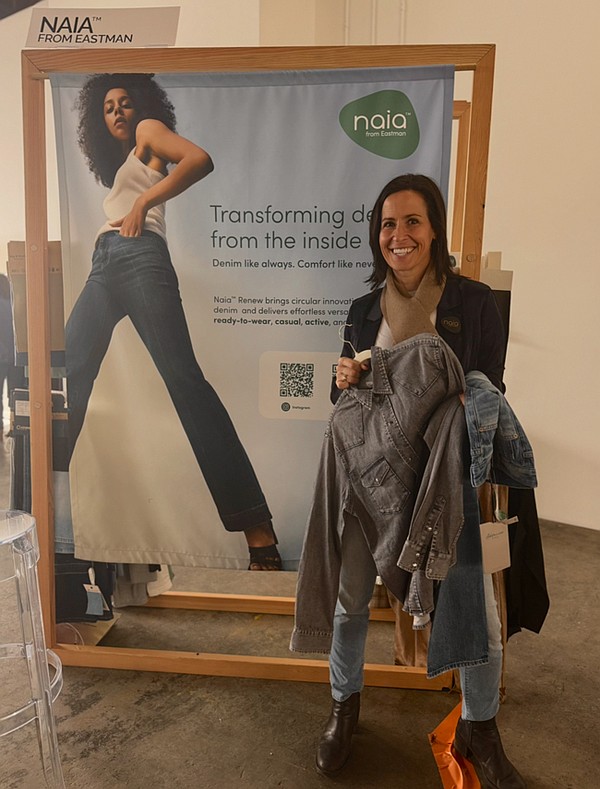
For example, NAIA produces both fiber and yarn exclusively in Tennessee and distributes globally. According to Joy Gruver, business development leader for North America, NAIA’s value lies in consistency and education. “We want customers to understand that we are a special fiber,” Gruver said.
Turkish manufacturer Strom Denim showcased water- and energy-reducing machinery capable of cutting water usage by 80 to 90 percent. Founder and CEO Omer Mert said, “The majority of sustainability comes from fabric,” pointing out their use of organic materials and non-harmful chemicals such as sodium hydrosulfite or synthetic indigo.
Los Angeles–based Vector Apparel Projects highlighted a domestic, hyper-local model. Fabrics are dyed and knit locally with a supply chain roughly ten miles and an emphasis on California-grown regenerative cotton. “It’s about people,” said founder and CEO Dana Weinstein.
Desert Studios, a Dubai-based denim manufacturer and the region’s only jeans producer, sources fabrics globally and operates with Italian machinery. Managing Director Khurram Razaq said Desert Studios supplies both European and U.S. brands, underscoring how geographically diverse manufacturing hubs are becoming essential to risk mitigation and scale.
Swiss-owned Lab Denim introduced “New Blue” bio-based dyes designed to color only natural fibers at the fiber stage rather than the finished garment. Chairman Dr. Mheidle described the process as the world’s most sustainable denim-dyeing method, eliminating water waste and toxic chemistry while achieving wear patterns comparable to traditional indigo.