INDUSTRY FOCUS: DENIM
Remaining Committed to Denim Progress and Success in 2026
True-blue passion in the denim industry is often linked to the ways in which the professionals in the category seek to improve it. The dedication of denimheads to improving the industry through areas including sustainability, technology and supporting the communities in which they develop or produce their goods is unmatched in many ways.
The changing landscape of fashion over the last year has forced many in the industry to reexamine their commitments to improving the industry and how each company defines success. Denim remains a bastion of social awareness, technological and production innovation, philanthropic initiatives, and ecologically progressive advancements. At the heart of these commitments are transparency, partnerships and a tightly knit community that remains committed to progress.
California Apparel News asked denim-industry experts: What sustainable, transparency, philanthropic, financial, manufacturing, technology or social commitments are you strictly adhering to during 2026 and in what other areas of the denim business will you be more flexible?

Wilson Avalos
President
The Common Link
At The Common Link, supply-chain transparency and improving the quality of life for everyone connected to our work are fundamental principles that have guided us since our inception. These values shape our identity and influence the partners we collaborate with as we collectively embrace the responsibility we have to our customers.
Being a responsible partner goes beyond the products we manufacture. We believe that the production process is equally crucial, and as a result we ensure that ethical practices, fair labor and sustainable sourcing are integral to every decision we make.
We also acknowledge the significance of flexibility and adapt our approach to meet the diverse requirements of our customers. This may demand the flexibility to change production processes or design alternative solutions to service different business models.
Flexibility has become one of our strengths as we have had to adapt our operations to service customers of all sizes from different countries.
Beyza Baykan
Founder and CEO
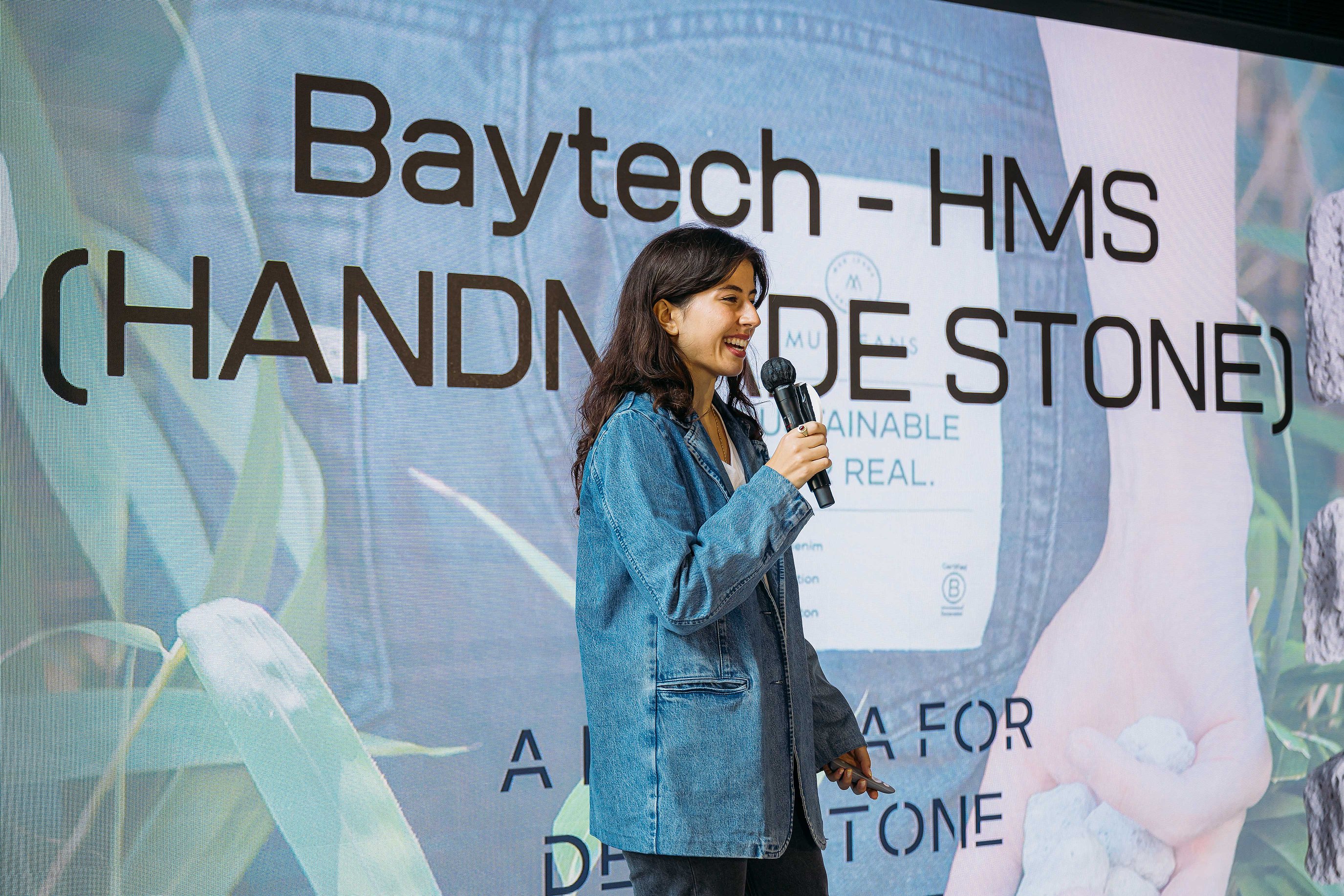
Baytech Ltd.—HMS Hand Made Stone
In 2026, our non-negotiables are impact, transparency and real-world applicability. At Baytech–HMS, we are strictly committed to reducing waste at the manufacturing level. That means eliminating sludge, lowering water and energy use, and replacing single-use materials like pumice with durable, circular alternatives.
We are equally firm on transparency. Any sustainability claim we make must be backed by data, mill-level results or third-party validation. As regulations tighten and greenwashing becomes easier to spot, credibility will matter more than ever.
Another commitment we hold strongly is accessibility. Alongside our industrial work, we actively support independent designers, students, upcyclers and small studios by offering free technical guidance. We adapt professional washing techniques for home or small-lab use, share step-by-step instructions and help lower the barrier to entry to sustainable practices. Building awareness quickly requires strong creative communities, and designers play a key role in that shift.
Internally, we are investing in making our own production greener. Resources gained through innovation challenges and partnerships are being directed toward increased automation and green technologies in our manufacturing plant, helping us improve efficiency while further reducing impact.
Where we remain flexible is in how solutions are adopted. Every mill, region and brand operates under different constraints. Our role is to adapt, not dictate, while still delivering measurable improvement.
Finally, we remain committed to education and dialogue. We will continue attending and speaking at industry panels to share knowledge, challenge assumptions and push for practical change. Sustainability moves forward when it is practical, inclusive and shared.

Luca Braschi
Marketing and Technology Manager
Soko
In 2026, Soko strengthens its commitment to increasingly responsible chemistry, reaffirming the values that guide its growth: applied innovation, practical sustainability and a strong focus on people. Specialized in textiles and denim, the company continues to develop advanced auxiliaries and formulations designed to support production processes that are more efficient, safer and have a lower environmental impact.
Research and development remain the driving force behind this journey. Soko invests in solutions and technologies that reduce water and energy consumption and offer alternatives to traditional chemicals. The goal is to help laundries and manufacturers achieve higher sustainability standards without compromising performance, quality or the aesthetic of denim.
Close collaboration with brands, customers and partners across the entire supply chain plays a key role. Through technical partnerships, shared projects and ongoing dialogue, Soko supports the development of innovative processes and new denim expressions, contributing to the industry’s evolution in a concrete and measurable way.
This collaborative approach is supported by a solid, long-term business vision that enables continuous investment in innovation and expertise. At the same time, the company remains flexible in its creative applications and service models, responding quickly to the needs of a constantly changing market while staying true to its core values.

Filippo Colnaghi
Brand Manager
XLANCE
In 2026 we hold fast to the principles that define XLANCE: traceable production, reduced-impact technology and a fiber engineered to last longer so stretch denim can be made—and worn—more sustainably. These commitments are uncompromising. Yet we stay open where innovation thrives: new finishing routes, creative wash concepts and cross-industry partnerships that allow designers and mills to redefine what responsible stretch denim can be.

Paola Corna
Chief Financial Officer, Sustainability and Human Resources Manager
ACM
In 2026, ACM reaffirms its commitment to a responsible business model rooted in tangible, verifiable practices. Our 2024 Sustainability Report, published voluntarily, reflects a systemic approach to sustainability: exclusive use of renewable energy, 100 percent certified or recycled packaging, local sourcing, and the adoption of traceable materials such as GRS-certified metal alloys.
But our journey began long ago. Since 1993, ACM has operated an in-house system for wastewater treatment and total water recirculation—a visionary investment that anticipated today’s environmental awareness by decades.
These commitments are non-negotiable. Sustainability is an intrinsic value at ACM. It is reflected in a safe and inclusive work environment (zero workplace injuries since 2022!), in certifications such as HappyIndex at Work, and in concrete initiatives for the community and biodiversity.
Creatively, however, we maintain maximum flexibility to support our clients in their pursuit of tailored, original and sophisticated solutions. Custom accessories, jewel-like buttons, embossed waistband labels and leather inserts become tools for elevating denim to an almost couture aesthetic. Our goal is to merge excellence, ethics and innovation while remaining faithful to the Made in Italy style that has defined us for over forty years.

Anatt Finkler
Creative Director
Global Denim
I genuinely believe there are certain areas where flexibility should not be an option and where we must align ourselves to achieving the highest possible standards by fully complying with what is required. These include transparency, social commitments and sustainability. Our intention in these areas is to set continuous, achievable goals that allow us to improve every day.
I believe that focusing solely on large annual, three-year or five-year targets can sometimes distract us from creating tangible change. I would rather achieve incremental progress daily, knowing that these small improvements compound over time, rather than relying on momentum and waiting to see if a distant target is eventually reached.
In terms of manufacturing and technology, we are very excited to continue developing products that represent some of the most innovative manufacturing coming out of the Americas. We are proud to be among the pioneers driving this change and believe that injecting creativity into these areas while allowing the world to see us through a different lens will foster growth across the region.
Unfortunately, the financial aspect cannot be as flexible. Ultimately, the market will determine, through investment and willingness to participate in the supply chain, whether meaningful change can be accelerated and achieved alongside sustainability goals or whether these efforts risk being deprioritized, as we have seen in many cases this year.
Paolo Gnutti
Creative Director
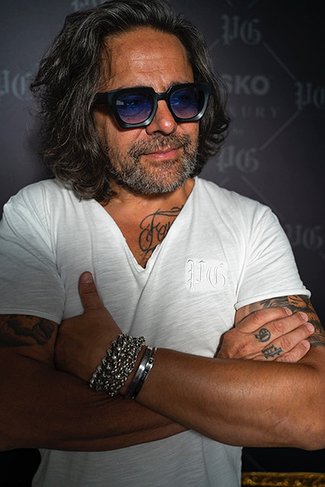
ISKO Luxury by PG
In 2026, our approach to denim will be grounded in non-negotiable principles: tangible sustainability, technological innovation, and full traceability and transparency across the entire supply chain.
Through the use of ISKO RE&UP and ISKO Recod technologies, we integrate next-generation recycled and regenerated fibers, significantly reducing the reliance on virgin raw materials and delivering a measurable reduction in environmental impact—without compromising quality, aesthetic performance or technical performance. For us, circularity is not a theoretical ambition but a concrete, measurable industrial model embedded within our production processes.
With ISKO Luxury by PG, we envision a denim expression capable of merging responsibility with storytelling: High-tech materials, advanced constructions and sophisticated finishes come together within an aesthetic narrative that reinterprets heritage, workwear and military influences through a contemporary, conscious lens. In this framework, technology becomes a strategic driver not only for sustainability but also for expanding the creative and performance potential of denim.
We deliberately maintain a flexible approach to design, collaborations and distribution models, viewing these areas as essential to preserving denim’s cultural relevance and its ability to engage with diverse worlds, from luxury to streetwear.
From an organizational and financial perspective, we operate through lean, agile structures that allow us to respond swiftly to evolving market dynamics while remaining fully aligned with our core values.
For us, denim is not merely an identity product but a continuously evolving platform for responsible innovation.
Juan Carlos Gordillo
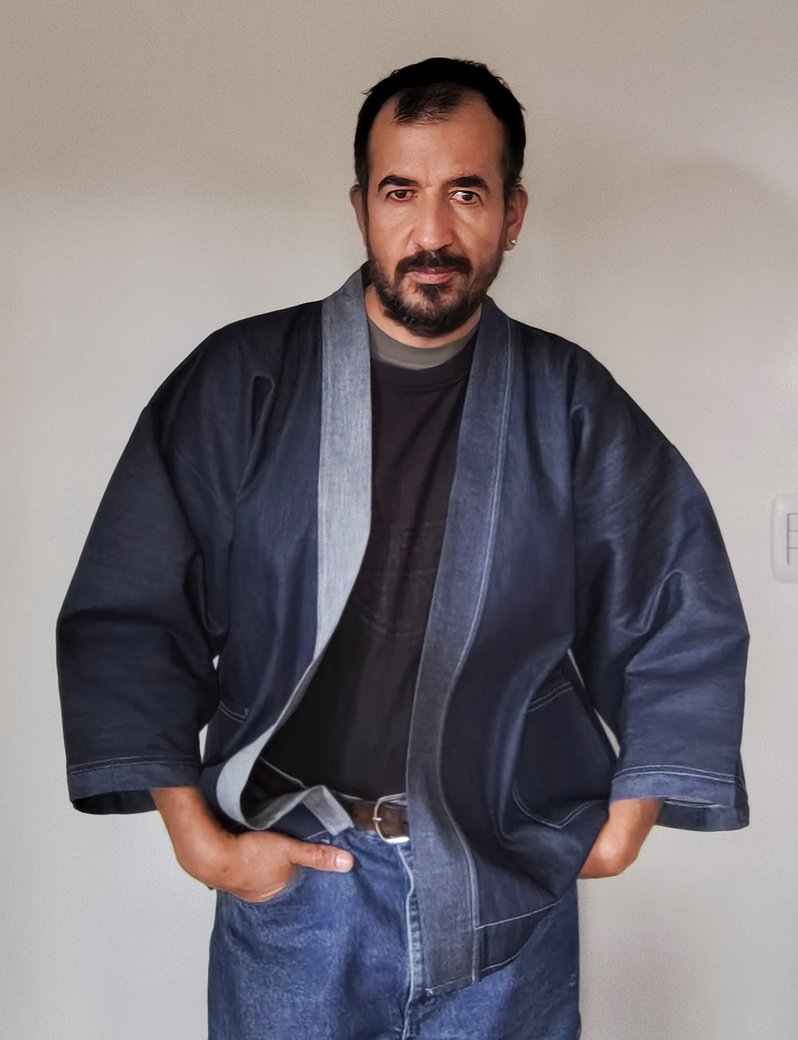
Denim Designer
As an independent designer, my relationship with the denim industry is rooted in direct experience rather than scale. While I do not operate as an industrial manufacturer, I have collaborated closely with leading companies whose practices have deeply influenced my commitments for 2026.
What I adhere to strictly is material integrity, transparency and human-centered production. Working with mills such as Cone Denim allowed me to witness how responsible dyeing, fiber selection and finishing processes directly affect workers’ health and environmental impact. Details such as non-bleeding dyes or low-residue fabrics may seem minor, but in real working conditions they make a substantial difference for those handling denim for long hours.
I am equally committed to traceability and verified sourcing. Technologies developed by partners like Oritain, Jeanologia and mills such as Tejidos Royo demonstrate that sustainability must be measurable, transparent and grounded in science—not marketing narratives. These collaborations reinforced my belief that ethical production depends on accountable systems and, above all, ethical people.
Where I remain flexible is in scale, timelines and technological adaptation. As an independent designer, flexibility allows me to collaborate across different production contexts while maintaining my core values. Innovation, when accessible and honest, is a powerful ally rather than a compromise.
For 2026, my commitment is clear: to work only with partners whose practices I can verify, whose processes respect both people and planet, and whose transparency allows consumers to make informed, responsible choices.

Fatma Korkmaz
Product Development Manager
ISKO
For ISKO, the most critical commitment we are strictly adhering to in 2026 is delivering high-quality denim without compromise—maintaining, and even enhancing, appearance and strength while achieving superior durability through RE&UP next-generation fiber technology.
From the design phase onward, we apply a circular economy mindset across the entire value chain. Circular and certified raw materials are made fully traceable at every stage, ensuring transparency not only in sourcing but throughout production.
Our responsibility extends beyond materials. We rigorously assess and guarantee the environmental performance of manufacturing processes as well as their social impact, ensuring all operations meet appropriate and verified standards. This approach is applied consistently to our suppliers and partners, reinforcing accountability across the supply chain.
Transparency is ensured through globally recognized certifications and standards, which remain non-negotiable for ISKO.
At the same time, we allow greater flexibility in areas such as aesthetic expression, fabric applications and design interpretations, enabling creative freedom for brands while remaining firmly anchored in our sustainability, traceability and social-responsibility commitments.

Amy Leverton
Founder
Denim Dudes
As a passionate and enthusiastic small-business owner who has struggled in the past with stretching my resources for unsustainable ROIs, my approach in 2026 will be selfishly aimed toward myself and my business! I heard this story over and over again amongst independent designers and consultants in 2025—that clients are asking for more and more, for less and less budget, and we small folks are struggling. Social sustainability is important to our industry ecosystem, and it’s our responsibility to put down boundaries. It goes against my enthusiastic, positive nature, but Denim Dudes won’t survive unless I make this change.
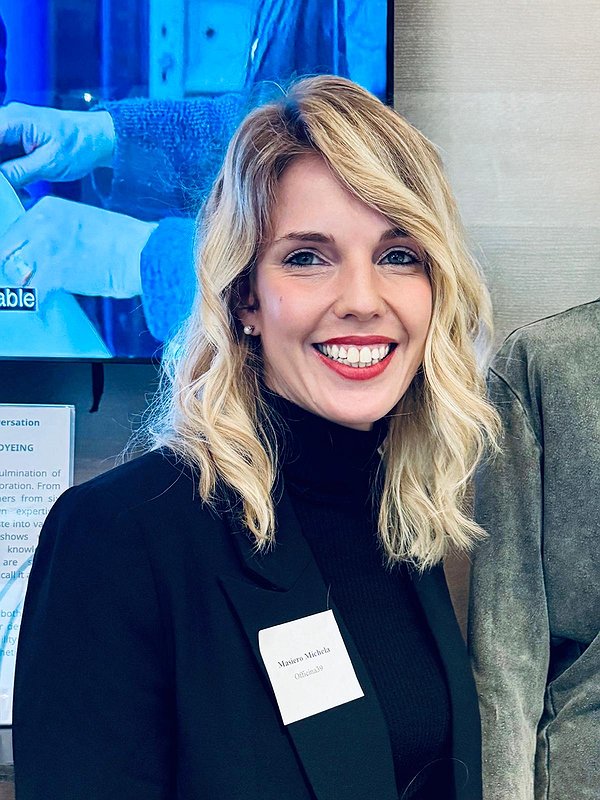
Michela Masiero
Project Manager
Officina39
In 2026, Officina39 continues to advance the approach that has long positioned the company as a reference point in the industry: pairing responsible chemistry with practical efficiency. Sustainability remains a fixed commitment, but its impact grows when the cleaner option also enhances process performance and reduces operational costs.
This is the principle behind the ongoing development of ZERO PP | ALL.IN, the one-product, one-cycle system built to replace potassium permanganate in denim finishing. Applied directly to raw garments, guided by laser, developed with dry ozone and completed without a rinse step, the process reduces water, energy and time while improving on safety and transparency. Its adoption shows that responsible chemistry can also be competitive on efficiency and, therefore, truly scalable.
Officina39 is also refining several complementary technologies that support lower-impact finishing: Marvel Colors and Marvel Metal Laser for creative expression, Smart O3 for ozone-based treatments, Novapret Laser Color and Novapret BLOCK & FIX for pigment and laser applications, and the circular dyestuff platform Recycrom, derived from recycled textile waste.
Across all these developments, the company remains firm on safe chemistry, resource efficiency and transparency. The flexibility comes in how these technologies can be combined or adapted to meet specific design goals, production setups or cost structures. Officina39 aims to give mills, laundries and brands room to experiment without compromising environmental integrity or economic viability.
In short, 2026 will continue along the same path: clear commitments, measurable improvements and the freedom to innovate responsibly.
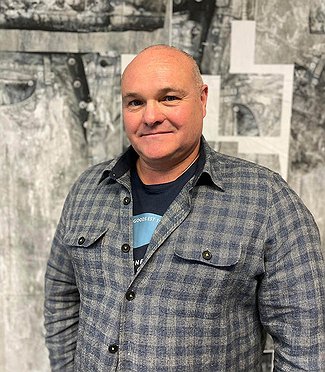
Philippe Mignot
Project Manager
NextPrinting
At NextPrinting, sustainability and flexibility are not opposing forces—they fuel one another. Our digital printing technology was born from the desire to offer bespoke, low-impact solutions aligned with the ESG goals of the fashion and denim industries, both increasingly focused on sustainable innovation.
In 2026, we continue to invest in pigment and transfer printing systems that drastically reduce the consumption of water, energy and chemicals from weaving through to garment production. Everything begins with the selection of certified materials (GOTS, GRS, FSC) and evolves through direct collaboration with style offices: Every print is designed to be visually indistinguishable from traditional treatments yet with a significantly lower environmental impact.
This technical precision allows us to remain agile in terms of aesthetics, volumes and timing, offering solutions adaptable to the creative needs of brands—from experimental capsules to full collection developments.
NextPrinting is not just a technology; it is a strategic partner for those who want to create responsible fashion without sacrificing the expressive power of their product.
We print the present to be the future.
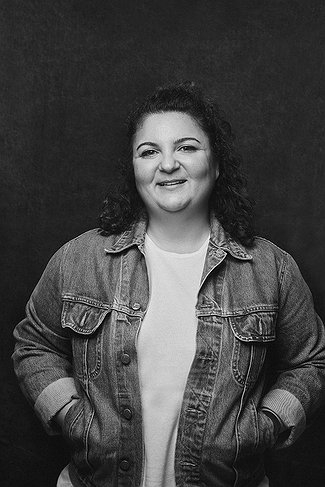
Sebla Önder
Marketing and Sustainability Manager
ORTA
In 2026, our strongest focus at ORTA is on the fibers we choose because we believe every responsible denim story begins at the raw material. We stay committed to regenerative and low-impact options like our cottonized hemp grown with zero chemicals and zero water, HV100 TENCEL Lyocell, made with responsible cellulose and production methods while keeping the soft hand and luxury feel, and of course regenerative cotton that supports healthier soils and stronger farming communities.
These choices are essential for us as they shape most of the environmental impact long before the fabric is made. We will continue working closely with our brand and supplier partners for full transparency and trusted origin of every fiber that enters our mill. While these raw-material principles are strict, we keep flexibility in how we design and engineer the fabrics with responsible and innovative solutions so brands can still explore different aesthetics, performance needs and market directions.

Ebru Ozaydin
Global Product Category Director—Denim, Wovens and RTW
The LYCRA Company
At The LYCRA Company, we’re committed to sustainability, transparency and responsible manufacturing. These aren’t just buzzwords for us; they’re built into our sustainability platform’s pillars of manufacturing excellence, product sustainability and corporate responsibility, and we measure our progress every year. That means cutting Scope 1 and 2 emissions, reducing water and waste, and keeping a safety record that’s well above industry standards.
We also believe transparency matters. That’s why we pursue trusted third-party certifications, including USDA BioPreferred, ISCC Plus, GRS, RCS and OEKO TEX STANDARD 100. These validate our renewable and recycled content and ensure product safety.
On the product front, our renewable LYCRA EcoMade fiber is the world’s first bio-based spandex now available at commercial scale. Made from 70 percent dent corn, it reduces the carbon footprint while delivering the same performance people expect from LYCRA fiber. We’re driving its adoption across denim and a range of garment categories, helping brands achieve their sustainability goals without compromising on quality.
At the same time, we recognize the denim market is always evolving, which drives our flexible approach. By partnering with mills, we co-create solutions that meet identified needs or trends. For instance, LYCRA VintageFX denim, launching in Q2, has been developed to meet current consumer preferences for looser fits. This fabric offers durability, comfortable stretch and an authentic denim appearance.
In 2026, our nimble responsiveness to market shifts, anchored by firm sustainability commitments, will define how we will help move denim forward.

Holly Sanders
Founder
The Angela
I will strictly adhere to my philanthropic goals to improve the lives of women and children all over the world. In 2025, The Giving Jean, our philanthropic organization, fulfilled the wish list of Reading Partners LA, an organization that provides free services to help people obtain literacy. It’s a mission that is really important for the future of the city of Los Angeles as low literacy rates in communities are linked to poverty, high incarceration rates, low civic involvement and higher crime.
I recently learned that recycled polyester leaches a lot of plastic into water due to the lack of strength of recycled fibers, which has pushed me to design using more-natural textiles. I will be more flexible in the use of recycled materials and focus sustainability efforts on thoughtful design and educating consumers on garment care.
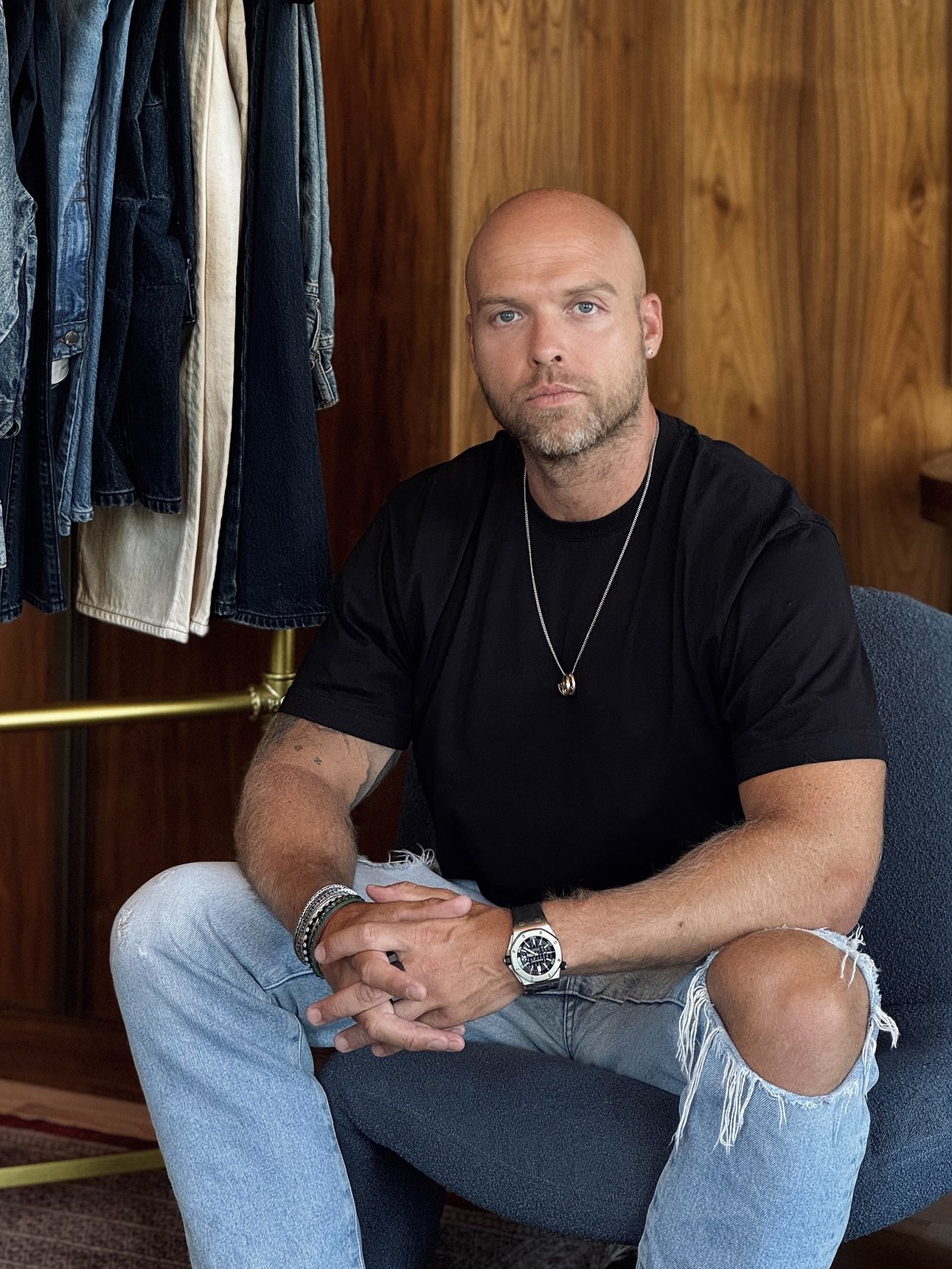
Adam Taubenfligel
Co-founder and Creative Director
Triarchy
Sustainability, transparency and manufacturing integrity are not goals for us, they are baseline requirements. At Triarchy, we operate under the belief that if a product cannot be made responsibly it should not be made at all. We are strictly committed to responsible material sourcing, low-impact production and third-party-audited, end-to-end supply-chain visibility.
This includes continued investment in reduced-water finishing, laser and ozone technologies, and the acceleration of plastic-free stretch and digital dye alternatives.
We intentionally work with a limited, highly aligned network of mills and factories that meet our environmental and social standards, prioritizing ethical labor practices, accountability and long-term partnership over speed, volume or convenience. Transparency is not a brand story for us, it is an operating system, ensuring that every decision can be traced, measured and improved upon.
Our values are fixed but our methods are not. In 2026, flexibility lives in execution, not compromise. Innovation will be introduced through disciplined testing, limited runs and phased rollouts to ensure scalability and real impact rather than performative adoption. We will remain flexible on growth and volume, resisting overproduction and short-term expansion in favor of durability and long-term resilience. For us, progress is defined by integrity, not acceleration, and the future of denim demands nothing less.
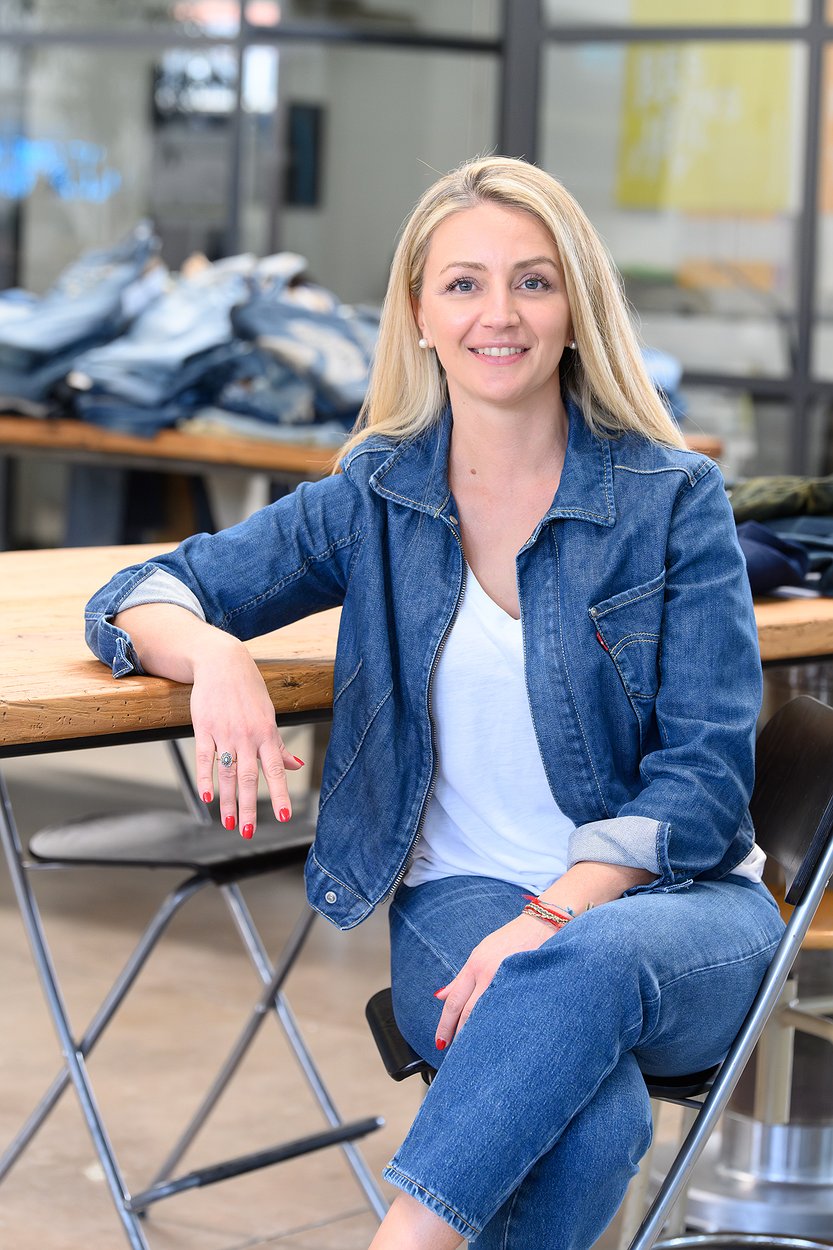
Alice Tonello
Marketing Research and Development
Tonello
Our commitments are very clear and deeply rooted in who we are. People come first. We will continue to support our local community, invest in employee welfare and take a decisive step forward with the publication of our first Sustainability Report. For us, transparency means having the courage to measure our impact, share results and set concrete goals for continuous improvement.
Innovation is equally important. We will keep investing in R&D to push the boundaries of what garment finishing can be. This vision will take physical shape in 2026 through a major expansion of our working and production spaces, including a new headquarters in Italy designed according to advanced sustainability principles. Alongside it, a new R&D center will act as a true engine of responsible innovation, dedicated to developing processes that are safer for people and lighter on the environment.
At the same time, we remain flexible in how these values are applied across the industry. Every supply chain moves at a different pace, and we believe real change comes from collaboration. Our role is to provide adaptable technologies and partner-driven solutions that support multiple paths toward a more responsible future without ever compromising our core values.

Aydan Tuzun
Senior Vice President of Sales and Marketing
Naveena Group
In 2026, Naveena Denim Mills is strictly committed to strengthening sustainability, transparency and responsible manufacturing across our denim operations while remaining flexible in how we innovate and adapt within the broader denim business.
On sustainability, we will continue full compliance with globally recognized standards including regenagri, Better Cotton (BCI), GOTS, OCS, GRS and RCS alongside robust environmental certifications. Our focus remains on responsible raw-material sourcing, improved traceability, strict chemical management, wastewater control and waste reduction. We will also continue monitoring energy and water consumption, with clear targets for gradual reduction.
Transparency is non-negotiable. We are committed to full supply-chain traceability from raw materials to finished goods, supported by accurate and timely data sharing with buyers, auditors and certification bodies. Digital systems such as ERP and SCADA are central to ensuring audit readiness and data integrity.
Socially and ethically we maintain zero tolerance for child labor, forced labor, discrimination or harassment while ensuring fair wages, legal working hours, freedom of association and safe working conditions. We also remain invested in worker welfare, training and local community engagement through employment and skills development.
Financially, we adhere to ethical and transparent practices, timely payments and continued investment in compliance and sustainability.
Where we remain flexible is in how we achieve these goals—through evolving technologies, process optimization, product development and collaborative approaches—allowing us to respond to market needs while staying anchored to our core commitments.

Luciano Vivolo
Founder and President
Vivolo
Vivolo will continue to strengthen its commitment to ethical and transparent manufacturing in line with a multi-year ESG roadmap launched with the release of our first Sustainability Report [2023–2024]. The company will report annually on its progress regarding environmental impact, with clearly defined goals: reduction of emissions, improved water efficiency, digital traceability across the supply chain, integration of Industry 5.0 technologies, increased use of bio-based, regenerated and certified materials (GRS, FSC, OEKO-TEX LEATHER STANDARD), and low-impact processes such as 3D printing and solvent-free technologies.
At the same time our commitment to future generations will continue, with initiatives such as the Luciano Vivolo Award, which for the first time this year was expanded nationwide to include fashion-design students from fine-arts academies across Italy. This project was created to strengthen the bridge between education and industry, promoting a culture of sustainable and responsible design and contributing to the development of tomorrow’s fashion designers.
In the denim segment, Vivolo will maintain stylistic and creative flexibility, offering innovative and bespoke solutions—from back patches with exclusive treatments to highly customized details such as charms. Our goal remains unchanged: to provide each brand with a unique accessory—one that transcends time and leaves a lasting impression.

Vivian Wang
Chief Executive Officer
Kingpins Show
As a global leader in the denim supply chain, we want our trade shows to be welcoming spaces where denim makers and their partners can come together, connect and explore what’s next for our industry—especially the innovations that are helping shape a more sustainable future.
We are intentional about who exhibits at our events, ensuring brands and retailers discover work from best-in-class suppliers who are truly pushing the industry forward.
This commitment inspired our Most Sustainable Product initiative, launched in 2019 by the late Miguel Sánchez. Our Kingpins chief technology leader was not only a gifted textile engineer but a visionary who helped define what sustainability could look like in denim. He championed the standout practices developed by our exhibitors, and his passion led to the creation of the MSP collection, brought to life through the talents of designers Piero Turk and Serena Conti.
We were heartbroken to lose Miguel in 2023. He was a friend, a colleague and a source of inspiration for so many in the denim community. Because he meant so much to me and my team, as well as the entire denim industry, we want to honor his legacy by continuing the work he started. Though he remains deeply missed, his influence is woven into the work we continue to do.
MSP is an ongoing reminder that our industry is filled with innovators who share Miguel’s love of denim, his commitment to a cleaner, safer, more circular future and his unwavering passion for our industry.

Amy Williams
Chief Executive Officer
Citizens Of Humanity Group
Sustainability isn’t a standalone initiative for us—it informs every decision we make. Looking ahead into 2026, we’re deepening investment in regenerative cotton, fiber innovation and low-impact wash technologies while scaling bio-based dyes and plant-derived stretch. Designing timeless, high-quality pieces made to last remains core to our approach, which is grounded in transparency and supported by our vertical model.
As regulations evolve and consumers become more informed, we believe the brands that will endure are those that take responsibility for how their products are made and are willing to innovate from the ground up. Ultimately, durability and desirability go hand in hand for us. We’re committed to creating pieces that age beautifully, stay in wardrobes longer, and deliver true luxury and craftsmanship with responsibility at the center. That’s the future we’re building toward.
We’re more flexible in how we deliver against those commitments by embracing new technologies and evolving production methods and alternative materials as they become viable at scale. Our focus is steady, measurable progress that balances values with the realities of the denim industry.
Responses have been edited for clarity and space.