INDUSTRY FOCUS: SUSTAINABILITY
Choosing Legitimately Sustainable Partners by Sorting Through Greenwashing Claims

Creating sustainable goods has long been a goal of many companies within the fashion industry, from the hippie outliers of the 1970s to businesses currently following environmental, social and governance (ESG) pillars defined at the corporate level. Unfortunately, campaigns within the fashion industry often contain a large amount of greenwashing and false sustainability claims despite consumer awareness and increased scrutiny of apparel supply chains.
Brands, designers, suppliers and manufacturers have joined forces to reduce greenwashing and increase the sustainable trustworthiness of the fashion industry. These companies and organizations hold each other accountable by thoroughly examining their partners and sourcing in addition to adhering to their own ecologically sound, socially beneficial and responsible business commitments to show how they not only demand accountability but also embrace it.
California Apparel News asked apparel-sustainability experts: How do you sort through sustainable claims to expose companies that engage in greenwashing or prove legitimacy of those who follow ecological practices?

Kerry Bannigan
President of the Board
PVBLIC Foundation
In assessing sustainability claims, I prioritize credibility, clarity and intent. Genuine ecological practice is reflected in how a company aligns its values with its operations, not simply in the language used to promote itself. I pay close attention to transparency and specificity. Companies with legitimate sustainability commitments are typically clear about what they are doing, how progress is measured and where challenges remain.
Sustainability is an ongoing process. My focus is on supporting higher standards and shared understanding across the industry so that responsible practices are recognized, trust is strengthened and durable, accountable impact is embedded into industry practice.

Meredith Boyd
Chief Product Officer
UNIFI makers of REPREVE
At UNIFI we believe provable claims benefit everyone, from suppliers and brands to retailers and consumers. We educate partners on the impact of our products, backed by trusted certifications. Our proprietary FiberPrint and U-TRUST technologies offer verified traceability and product authentication, ensuring claims can be proven, not just stated, because transparency builds trust, and trusted data drive meaningful change. All REPREVE-branded products include our proprietary FiberPrint tracer, which qualifies goods for U-TRUST certification to certify recycled-content claims.

Katrina Caspelich
Chief Marketing Officer
Remake
First, start with the specifics. Legitimate brands provide concrete data like percentages of sustainable materials, names of factories and third-party certifications. Greenwashers hide behind vague terms like “eco-friendly” or “conscious” without backing them up. If a brand claims sustainability but you can’t find detailed information on their website, that’s your first red flag.
Second, follow the visuals. Are you seeing generic nature imagery and green-leaf logos or actual photos of their supply chain, factories and the people making their products? Real transparency means showing the messy, complex work of sustainable production, not just aesthetic marketing.
Third, check if values translate into action. A brand can talk about caring for the planet and people all day long, but are they paying living wages? Publishing their factory list? Setting science-based emissions targets? Look for evidence of accountability: public commitments, progress reports and willingness to acknowledge what they’re still working on.
Finally, use your voice. If information is missing, email and ask. Legitimate brands welcome those questions. Companies that get defensive or dodge specifics are telling you something important.
The truth is that there’s no perfect brand, but the ones doing real work are transparent about both their progress and their challenges. I believe informed consumers asking tough questions are one of our best tools for holding the fashion industry accountable.

Paola Corna
Chief Financial Officer, Sustainability and Human Resources Manager
ACM
To distinguish genuine commitment from green-washing, we look first at a company’s willingness to share concrete data, the robustness of its certifications and the traceability of its supply chain. Without these elements, sustainability remains little more than a statement of intent.
At ACM, these principles are the foundation of our strategic approach. For many years, we have deliberately chosen to keep most of our production in-house, allowing us to maintain direct control over timelines, processes and impacts. This also enables us to provide our brand partners with verifiable documentation, including chemical and performance testing, corporate audits, ESG reporting and the careful selection and monitoring of suppliers based on environmental and social criteria.
In 2025, we published our first sustainability report, prepared in accordance with GRI Standards. The report transparently outlines the issues most relevant to our environmental, social and governance impact, including responsible sourcing practices, the use of renewable energy—100 percent in 2024—circular water management, certified packaging and the growing use of GRS-certified recycled materials.

Alberto De Conti
Marketing and Business Development
Officina39
At Officina39, sustainability is embedded in our Trustainable proposition, which, together with Imaginable and Performable forms our three strategic pillars. We believe sustainability must be demonstrated through verifiable facts, not marketing narratives.
The first filter we apply when evaluating sustainability claims—whether our own or those of others—is evidence: data, documentation and measurable impact across the product life cycle.
We look beyond generic statements such as “eco-friendly” or “green” and focus instead on objective criteria. These include compliance with recognized frameworks such as ZDHC MRSL, brand RSLs and relevant third-party standards as well as transparency of Safety Data Sheets, chemical composition and traceability of raw materials. Legitimate sustainability is always auditable.
Sustainable chemistry is not only about what a product claims to do but how it is manufactured, how consistently it performs in industrial conditions and whether it enables customers to reduce water, energy, chemicals or reprocessing at scale. We validate this through controlled trials, real production data and long-term customer feedback rather than isolated lab results.
Companies that genuinely follow ecological practices show continuity and evolution with clear accountability over time and a willingness to disclose limitations as well as progress. Greenwashing, by contrast, often relies on selective storytelling and short-term positioning.
Internally, Officina39 applies the same rigor to its own portfolio. We do not position sustainability as an add-on but as a technical responsibility, developing solutions that deliver measurable environmental benefits while remaining industrially reliable and economically viable for our customers.
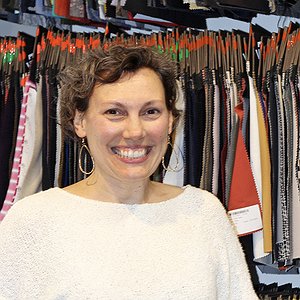
Betsy Franjola
President, BFF Studio; Founder, PREFACE; and Chief Executive Officer, Hocking Hills Garment Center
Customers can—and should—do basic online research into the certifications listed on a product to better understand what those claims actually mean. Certifications can provide a helpful starting point and a shared language around environmental responsibility.
That said, certifications only tell part of the story. At some point, you’re still placing trust in a third-party organization you may not know or fully understand. Sustainability, in practice, ultimately comes down to trust—and trust is built through transparency and relationships.
This is where brands matter. Larger brands may have recognizable credentials and certifications that help validate their claims. Smaller brands, however, often offer something equally valuable: access. Many can’t afford costly certification processes, but they can answer questions directly. They can tell you who made the product, where it was made, what raw materials were used and why certain decisions were made.
Legitimacy shows up in a brand’s willingness to be accountable and open—not just in the logos on a hangtag. Greenwashing thrives on vague language and distance; real ecological practice is grounded in clarity, specificity and conversation. The more a company invites you into their process, the easier it is to separate meaningful action from marketing.

Jay Gaines
Chief Marketing and Content Officer
Worldly
Companies can demonstrate their commitment and efforts to pursue responsible and ecological practices by gathering primary data to track their individual baseline performance and progress in key areas like GHG emissions, water use, waste and chemical management. Primary data provide the clearest picture of how a business is performing in these categories. It can also highlight how brands, retailers and manufacturers can improve their operations.
Transforming a supply chain to be more responsible doesn’t happen overnight. Studies continue to show year-over-year increases in purchasing of products that are marketed as sustainable. It’s clear that customers seek to support companies that are honest in their story-
telling and show progress in making their operations more socially and environmentally responsible. Brands that bring their customers along the journey and show their progress with data-backed information deepen trust with their customers.
Customers don’t expect their favorite brands to be perfect, but they do expect progress. They want to support brands that prioritize reducing their environmental impact and that care for their communities. These are the businesses that are thriving and navigating today’s challenging marketplace more successfully than brands greenwashing or making vague claims without substantive or verified data to back them up.
Primary data reporting shows that a deeper connection exists between brands and their suppliers. It is a reflection of strong communication and collaboration between business partners that can further deepen trust with other stakeholders. The best brands continue to strengthen those bonds and share their progress with customers on an ongoing basis.

Jason Keller
Sustainability Leader, Textiles
Eastman Naia
In today’s apparel industry, separating meaningful sustainability from greenwashing requires moving beyond slogans and focusing on evidence. When we assess whether something is credible or simply marketing, we start by asking for proof that can be verified—not just good intentions. That means clear definitions, transparent scope and evidence that can stand up to scrutiny such as relevant third-party certifications and data grounded in an independently reviewed methodology such as an LCA.
It also helps to look at how clearly a company explains its supply chain. Where do materials come from? How are they processed? What’s included in the claim and what isn’t? Sustainability is rarely absolute, and being upfront about both progress and limitations tends to build far more trust than an overly simplified narrative.
Another practical check is whether a solution can truly scale. Many initiatives look compelling in small volumes or limited pilots, but real impact comes from approaches that can be implemented at industrial scale while maintaining consistent quality, performance and traceability. That’s often the difference between sustainability as a business strategy and sustainability as a marketing add-on.
Over time, credibility is reinforced through long-term commitment: measurable goals, progress tracking and regular reporting, regard-
less of trends or market cycles. Collaboration with partners, NGOs, and industry organizations strengthens accountability and helps drive systemic change. In our experience, sustainability leadership is not about claiming perfection; it’s about proving progress and being willing to be held accountable.

Dr. Cindy J Lin
Chief Executive Officer
Hey Social Good
Whether it’s highlighting organic fibers, debuting eco-friendly packaging or pursuing a carbon-offsetting mission, companies making sustainable claims are now exceedingly prevalent. As consumers and buyers, it can be extremely challenging to determine the validity of these claims or even understand appropriately just what sustainability means. The biggest problem is the lack of clear industry standards, which makes it so challenging to distinguish between valid environmental claims and mere lip service. To date, there are over 500 different types of certifications, audits or verifying authorities in this space, including everything from proving organic content and fair wages to carbon-emission reductions.
The two best ways to prove legitimacy of sustainable/ecological practices are either to become a deep-dive multifaceted fact finder yourself or rely on authorized third-party verifying organizations that employ subject-matter experts, scientists and specialists who understand the complex world of sustainability and ecological preservation. In this way, one can understand that superficial claims of organic cotton by itself are insufficient to prove full-strength sustainability.
Instead, we must consider the entire supply chain and life cycle of a product, such as evaluating the source of cotton, working conditions of a factory, post-production waste, transit options and packaging. To best sort through the validity of sustainable practices claimed, it’s imperative to explore, question and recognize that sustainability is a lifelong journey for every company. Sustainability is not a detached initiative; it is a complex layer of decision-making that requires the same rigorous trade-offs as a company’s financial and operational strategies. Over time, sustainability becomes a double-edged sword: a major liability when mismanaged but a powerful, resilient asset when executed well.

Marco Lucietti
Head of Global Marketing and Communications
RE&UP
At RE&UP, we start by looking at how sustainability claims are defined and supported. Clear metrics, transparent data and traceability across the value chain help distinguish ambition from real-world application. We legally review all sustainability claims to ensure compliance with relevant regulations and guidance across the markets where we operate. Beyond compliance, we assess whether solutions function under everyday market conditions. Volume, performance and consistency are where circularity proves itself in practice.
Independent standards play a critical role. Certifications such as GRS and Cradle to Cradle help translate complex technical processes into transparent, comparable benchmarks. Just as important is clarity on system boundaries: where materials come from, how they are processed and what happens at end of life.
Finally, legitimacy shows up in partnerships. When brands, manufacturers and recyclers are willing to integrate solutions into mainstream production, share data and commit long term, it signals confidence beyond communication. For us, sustainability credibility isn’t about saying the right things—it’s about building systems that stand up to scrutiny at scale.

Steve McCullough
Event Vice President
Functional Fabric Fair (RX)
Sorting through sustainability claims starts with education, transparency and credible third-party validation. At Functional Fabric Fair, we help brands and sourcing professionals cut through greenwashing by providing access to trusted, science-based information from our highly vetted exhibitors. We work closely with leading certification and standards organizations such as bluesign to deliver resources and educational content that explains what certifications mean, how they are earned and why they matter. We also encourage exhibitors to support sustainability claims with clear data and recognized certifications rather than vague or unverified language.
Traceability, measurable benchmarks and accountability are essential in distinguishing real progress from marketing claims. By bringing together expert-led education during our Day 0 Sustainability Workshop and Expert Talks programming, as well as respected certification partners and open dialogue, Functional Fabric Fair supports companies that are making genuine investments in responsible practices and empowers attendees to make informed sourcing decisions. Our goal is to help raise industry standards and drive more-meaningful environmental responsibility across the functional and performance textile market.

Ngozi Okaro
Founder and Executive Director
Custom Collaborative
It’s really hard for the average shopper to know which sustainability claims actually mean something. Most people barely have time to schedule a doctor’s appointment let alone dig into where fabric comes from, who made a product or what impact it has on the environment. And even when shoppers want to learn more, that information isn’t easy to find.
One of the most effective ways to cut through the noise is to source as small and local as possible. Independent designers and local makers are usually eager to answer questions and share their stories, making it easier to establish genuine trust and accountability. A small business might not get sustainability right every time, but the scale of their impact is fundamentally different from that of a global brand built on overproduction.
Even purchasing a less-than-sustainable product bought from an independent retailer benefits the local economy. Studies show that small businesses recirculate over half of each dollar earned back into their communities, while large chains return closer to 14 percent.
Look for third-party certifications such as B Corp, Fair Trade or standards vetted by the Environmental Working Group. In general, the more specific a brand is about its practices the better.
While no approach guarantees perfection, sourcing small and local whenever possible gives you greater insight into the people and processes behind every product.

Sophia Ou
Co-founder
LifeLabs
The antidote to greenwashing is radical transparency backed by measurable data. At LifeLabs, we believe that true sustainability requires deep alignment across the supply chain combined with a simple and clear focus on the shared goal to reduce the carbon footprint of humankind.
We actively choose to partner with brands and suppliers who share our core values and are willing to work together to provide radical transparency in both mandatory compliance as well as internally mandated sustainability goals. In this era of the industry, integrity is the only metric that matters.

Utku Varol
Sustainability Manager
ISKO
At ISKO we assess sustainability claims by examining how environmental practices are embedded across the organization, not just in isolated statements or products.
One important consideration is consistency over time. Environmental initiatives are most effective when they align with long-term industrial strategy and are reflected across investment priorities, research and development activities and supplier engagement rather than being limited to isolated product-level actions.
Transparency plays a central role. Clear communication around methodologies, assumptions and performance indicators helps create a shared understanding of environmental impact and progress. In practice, this involves traceability systems, recognized assessment tools and data-driven targets that allow sustainability performance to be evaluated in a consistent and comparable way. Our sustainability, marketing and legal teams work in close alignment to monitor regulations, apply communication guidelines from global and national standards bodies, and ensure that all claims are based on transparent data supported by globally recognized standards and certifications.
External frameworks and industry collaboration further reinforce credibility. Certifications, standards and multi-stakeholder initiatives provide common reference points and encourage continuous improvement. We also take an active role in industry platforms that support the development of anti-greenwashing practices, contributing to the evolution of related laws and standards.
From this perspective, legitimacy is built through coherence: when strategy, operations and communication reinforce each other and sustainability is managed as an ongoing operational commitment rather than a stand-alone message.

Matteo Vivolo
Chief Sales Officer
Vivolo
With nearly fifty years of history and deep industry expertise, Vivolo has built strong, lasting relationships rooted in a culture of trust and mutual respect that extends throughout the entire supply chain, from upstream partners to the world’s most prestigious global brands.
Many of our suppliers have worked with us for years, enabling a transparent relationship that allows us to guarantee both the quality and ethical integrity of every component in the accessories we provide to our clients.
Collaborating with leading brands on the global fashion stage comes with a profound sense of responsibility. For us, this means being able to meet exceptionally rigorous international standards with precision. But we go beyond mere compliance: we actively promote new and more ambitious sustainability goals, working across economic, social and environmental dimensions to generate a positive impact on people and on the planet.
This ongoing path of improvement is backed by a solid set of certifications we have earned over the years—including ISO 9001, 14001 and 45001, as well as Oeko-Tex, GRS and FSC—which ensure the traceability and safety of our processes. To further demonstrate this commitment, we chose to voluntarily publish our first Sustainability Report for 2023–24. It stemmed from our desire to openly share with all our stakeholders the value of what we create and how we operate while clearly outlining the next steps in our strategy for responsible growth. This long-term vision is what drives our daily work, turning corporate responsibility into a shared competitive advantage.

Michel Waegli
Head of Business Development
Livinguard Technologies
At Livinguard Technologies we strive to make a difference and aspire to deliver not only leading performance but with every solution also a meaningful contribution to addressing some of the mounting environmental challenges of the textile industry. Unfortunately, it has proven challenging to break through the many sustainability-focused narratives that dominate the industry through players that engage in greenwashing.
To help brands and consumers alike evaluate the substance of any ecological claims arising from our technologies, we have adopted a strict and diligent approach to science-backed validation of any environmental benefits. We pressure-test our solutions through extensive validation in our in-house laboratories as well as together with independent third parties—laboratories or academia—not only based on generally accepted standards but also on modified protocols that mirror the real-life use of the products as closely as possible.
For example, when launching Livinguard Better Fresh—a next-generation odor-control finishing chemistry, which at the same time reduces microfiber shedding during home laundering by up to 80 percent—we tested the impact of this technology on microfiber shedding across different materials and fabric constructions and different test methods (AATCC TM212, TMC, ISO 4484, Hohenstein DIN SPEC 4872). We then pushed the envelope conducting tailored washing studies that covered the entire expected lifetime versus only the initial wash to generate a holistic data set.
Finally, we have adopted a science and data-backed communication approach: make our data available to the various parties and actively publish and share our research.

MeiLin Wan
Founder and Chief Executive Officer
GenuTrace
At GenuTrace, we sort real sustainability from greenwashing in apparel and textiles by asking one simple question: If you claim it, can you prove it? In an environment of heightened scrutiny—from the Uyghur Forced Labor Prevention Act in the United States to expanding EU regulations on forced labor, deforestation and product transparency—claims around cotton origin, recycled fibers and responsible sourcing must be supported by verifiable evidence.
Our approach goes beyond self-declared statements and marketing language. We apply evidence-based validation that combines physical verification of fibers and materials—such as stable isotope analysis for cotton origin and feedstock verification for recycled fibers—with rigorous review of chain-of-custody documentation across the supply chain. This allows us to assess whether fiber-level data, production records and finished products are consistent with the claims being made.
Companies engaged in genuine sustainability welcome this level of transparency; those relying on greenwashing often cannot withstand it. This is the foundation of Genuine Traceability—moving beyond intent and disclosure to material-level proof that can be independently tested, audited and trusted. By aligning scientific verification with practical traceability frameworks and digital records, GenuTrace enables brands, mills and retailers to transform sustainability claims into defensible evidence, reducing compliance risk while building lasting trust with regulators, customers and partners.

David Williamson, PhD
Chief Executive Officer
Modern Meadow
It’s not always easy to tell who is legitimately building sustainable products and workflows in the materials space, but there are some signs to look for. First, the company should have a vetting and traceability system to ensure its raw-input materials are ethically sourced and delivered. From there, I would expect to see data speaking specifically to the product’s creation, its use and its end-of-life fate. It’s not enough to just show internal data, either: There needs to be third-party validation from groups like Cradle to Cradle that can evaluate and qualify these types of claims. Collectively, this can help you parse truth from fiction.
At Modern Meadow, for example, sustainability has been a core design principle while developing our next-generation material, INNOVERA. The material contains over 80 percent renewable carbon and is built with a mixture of recycled rubber sourced primarily from used-car tires, biopolymers and soy proteins. The biopolymer mix comes from corn and rapeseed-oil waste, while the soy component is supplied by accredited U.S.-based partners who provide full traceability, ensure crops are non-GMO and follow regenerative agricultural practices. The Dry White canvas that gives rise to INNOVERA enables tanners to produce high-quality leather-like products while using significantly less water. It is also designed to have a circular life cycle.
And, you don’t just have to take our word for it. Our Dry White canvas has received Cradle to Cradle certification, validating its sustainable qualities.
Responses have been edited for clarity and space.