Functional Fabric Fair
TRADE SHOW REPORT
Spring Edition of Functional Fabric Fair at the Forefront of Innovation
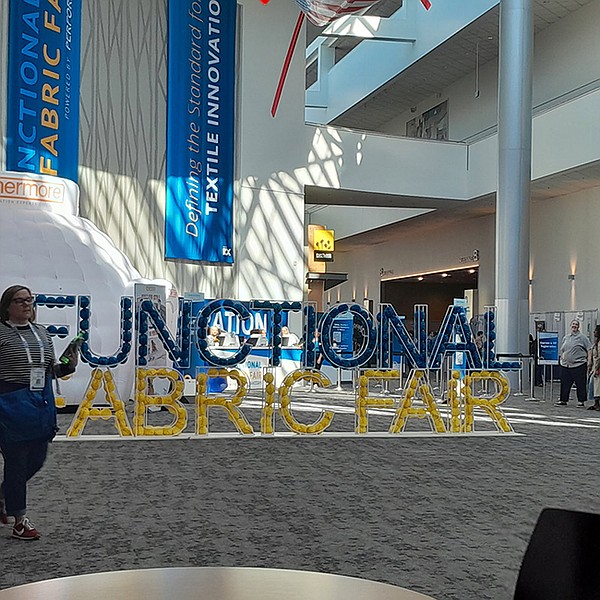
Product developers, designers, apparel executives and sourcing leaders filled the Functional Fabric Fair—powered by PERFORMANCE DAYS trade show at the Oregon Convention Center in Portland, Ore., April 7–9.
The event highlighted the advancements in sustainable materials and future-focused textiles and technologies that are propelling the global performance and outdoor apparel industry into the Spring/Summer 2027/2028 seasons and beyond.
According to Stephen McCullough, event vice president, “Over a thousand unique brands and individual companies attended this show—more than ever before.”
They packed into the Expert Talks and workshops on regulatory compliance, material development, circular design and rising women in the industry, among other topics. And they explored the 300-plus sustainable-certified suppliers showcasing the latest in fabrics, trims, finishes and technological breakthroughs.
Added McCullough, “Because we hold our applicants to the highest standards in sustainability, innovation and ethical employee practices, visitors were assured the most time-effective experience. Overwhelmingly they say this is the only show they attend.”
Among the exhibitors showing their top products:
CORDURA Advanced Fabrics debuted its Adventurer abrasion-resistant, versatile fabric collection. Between athleisure and workwear, it meets brand-quality standards for licensed products—and consumer needs.
“They want durable apparel, whether for hiking, climbing or trail sports, that also feels good in everyday life,” said Trey Fonde, global business development director.
Aimed toward materials specialists, designers and new-product developers, Adventurer fabrics are pre-curated and matched to outdoor end uses. This helps CORDURA Advanced Fabrics’ clients, “who face greater supply-chain complexity and compressed timelines, accomplish more.”
For durable, comfortable and luxuriously soft leggings and shapewear, Cotton Incorporated’s Cotton Flex fabrics blend the breathability of cotton with the flexibility of spandex. Moisture-wicking, odor-resistant and shape-retaining, the collection appeals to innerwear retailers and traditional brands expanding their activewear lines.
“We encourage brands that have relied on more-traditional materials to view cotton with a fresh perspective,” said Jennifer Lukowiak, director of account management. “With more people aware of microplastics, there’s greater interest in telling the natural-fiber story.”
The ICL Group is answering to environmental concerns and adapting to evolving regulatory expectations with TextiMag. The company’s fabric-finishing technology offers a magnesium-based solution that absorbs odor, helping garments stay fresher longer.
Sourced from the Dead Sea, this mineral is already used in the company’s wellness, nutrition and personal-care formulations. Said Oya Barlas Bingul, senior manager, business development and marketing, “TextiMag is integrated at the mill level and supported by close collaboration with brands and retailers. It’s not just a product. We’re building an ecosystem that connects the entire value chain.”
Then there’s Livinguard Technologies” Livinguard Better Fresh. “It’s a game-changing two-in-one performance application making textiles safer for people and the environment,” said John Mitchell, head of sales Americas.
Through a modified cationization process typically used in textile dyeing, Better Fresh provides market-leading odor control plus microfiber-shedding reduction in textiles—“a commercial first.”
“We’ve washed fabric up to a hundred times and still get excellent performance. Any outdoor-apparel company benefits while enjoying easy scalability across our customers’ existing supply chains.”
Naia from Eastman also is lessening environmental impact with its Naia Renew staple fiber for light sports and everyday wear. The company’s molecular technology entwines 60 percent sustainably sourced wood pulp with 40 percent GRS-certified recycled content. Naia Renew fiber is breathable, feels soft, manages moisture and dries quickly.
Joy Gruver, business development manager, said, “Working with Textile Exchange, we’re the only company that makes GRS-certified biodegradable cellulose acetate fibers made from wood pulp and recycled content.” Marmot and Patagonia have launched garments with it.
As Gruver put it, “It works for consumers.”
As does Schotex Global Co. Ltd.’s SCHOTEX Flex collection, among the company’s five, all of which use European-sourced yarns and recycled nylon and polyester. These multi-weight, single-layer, four-way-stretch textiles assure durability, resilience, a buttery hand and wearers’ unrestricted movement.
"We’re one of the premium synthetic manufacturers in the world that offers this high quality in performance textiles,” said CEO Gwen Hsu. “That’s because of our complete set of Swiss-built weaving machines from one of the greatest machinery-production houses in the industry. We’re very excited about the reception we’re getting.”
As for performance, Jessica Morgan, director of merchandising at Texollini, said, “It’s no longer just about moisture-wicking and compression but also comfort, softness and versatility—and a smarter blending of synthetics with cotton, TENCEL and modal.”
It’s why the company showcased its full scope of products in capsules emphasizing cellulosic-based fabrics for activewear—its primary clientele—and lifestyle, military and uniform.
“Brands are prioritizing a more-natural hand that is elevated and sits between activewear and lifestyle. We’re bridging that gap while meeting technical and market expectations and aligning with sustainability goals,” added Morgan.
Reducing environmental impact as well as cost also drives brands seeking out alternatives to 100 percent polyester or down wadding and batting. The Lenzing Group’s TENCEL Lyocell fill blends the best of natural wood-based fiber either with a small percentage of down or synthetic wadding, providing the performance properties of both for insulation.
“We’re getting more requests from yarn spinners, fabric suppliers, brands and retailers wanting recycled and natural high-performance materials. "However our customers define ‘performance,’ we’re committed to delivering solutions that meet their needs,” said Sharon Pérez, head of business development, West Coast.
In March, Thermore released its Ecodown Fibers T2T free-fiber product. Soft, high-lofting and clump-resistant, this blown-in or stuffed insulation is made from 80 percent post-industrial textile scrap and 20 percent post-consumer PET bottles.
“Our free-fiber line has been popular with fashion brands such as Nike, Brooks Brothers and American Eagle,” said Laura Beachy, senior vice president, global marketing and communications. “Textile-to-textile recycled components are increasingly trending across the industry. We’re always exploring innovative ways to give new life to materials otherwise headed for a landfill.”
Innovation and sustainability are indeed what this event is all about. As McCullough put it, “What are you doing that’s moving the needle, that’s interesting, that hasn’t been done before?” That’s the question even more exhibitors will answer this fall in Portland at the next Functional Fabric Fair.