INDUSTRY FOCUS: SUSTAINABILITY
Sustainable-Fashion Experts Find Hope in Clean Innovation
Fashion-sustainability discussions often touch on the ways in which progress is limited, either due to government roadblocks, high costs of producing responsible goods or low scalability of solutions that promote sustainable apparel. These challenges, at times, dampen positive outlooks and cloud the excited vision of changemakers in fashion sustainability. Despite the long road to reach a responsible, sustainable fashion industry, there is inspiration everywhere that can drive hope.
These progressive steps include AI implementation, materials upcycling and reuse, traceability technology, and tools that maintain clean work environments for factory employees. Each of these can generate hope for an improved fashion industry, and, together, they excite and inspire across the apparel business.
California Apparel News asked experts in fashion sustainability: What early-stage advancement, innovation or developing technology gives you hope for a sustainable future in fashion?

Jaffar Ali
Lead Digital Marketing and Communications
Sapphire Finishing Mills Limited
What gives me hope is not just a single technology but how innovation is helping us reconnect fashion with responsibility. We are seeing promising developments in areas such as regenerative agriculture, recycled materials, digital traceability and data-driven sustainability, but their real value lies in the impact they have on people and the planet.
For the first time, brands, manufacturers and consumers are becoming more connected to the story behind a product—where it came from, who made it and what impact it had along the way. Technologies such as Digital Product Passports and Life Cycle Assessments are helping make that possible.
Ultimately, a sustainable future in fashion will not be built by technology alone. It will be driven by collaboration, transparency and a shared commitment to creating products that respect both natural resources and the people behind them. Seeing the industry move in that direction gives us great optimism for the future.

John Armstrong
Chief Technology Officer
Worldly
Technology is finally letting us see the whole system and its human cost simultaneously. That visibility, grounded in actual data, gives me profound hope that fashion can transform at scale while protecting the people who make it possible.
There’s a convergence of three things happening right now: ambient data, primary supply-chain data and AI.
When you combine trade records, production volumes, chemical inventories and primary impact data through AI, something extraordinary happens: You can ask questions that were previously impossible. In which of my factories have workers been exposed to hazardous chemicals? Which products might put my customers at risk? How do these two questions actually connect through the same dataset?
The same data story plays from an individual worker all the way outward to a business’s global scale. A decision to switch to a less toxic dye reduces consumer risk and protects factory workers.
What excites me most is sustainability shifting from self-reporting to provable action. Real change shows up in the data, and commitments auto-resolve when behavior actually changes.
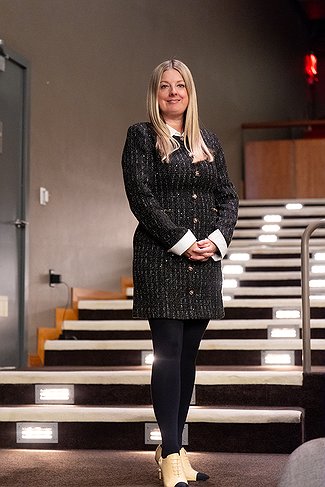
Kerry Bannigan
President of the Board
PVBLIC Foundation
One of the advancements that gives me the most hope is next-generation materials developed from agricultural and industrial waste, a category that is quietly moving from experimental to commercially viable.
Through REIN Hubs, a nature-based entrepreneurship platform led by PVBLIC Foundation and CleantechHUB operating across Colombia, Guatemala, Costa Rica, Peru and El Salvador, we are seeing this firsthand. Companies in the REIN ecosystem such as Green Leaf—developing plant-based fibers from pineapple crop waste, REEMADE—upcycling discarded industrial materials through circular design and TR GLOBAL GROUP—converting post-consumer textile waste into new raw material, are proof that this is no longer a niche pursuit. These are revenue-generating businesses attracting investment and creating green jobs.
A new generation of founders is not waiting for legacy brands to lead. They are rebuilding the material system itself, and the verification infrastructure is beginning to catch up. Digital Product Passports and traceability technology are creating the accountability layer that allows these advances to scale with credibility, moving the industry from claims to evidence.

Oya Barlas Bingul
Senior Manager of Business Development and Marketing
TextiMag
Real progress will come from combining smarter materials, safer chemistry and better product design.
What gives me hope is the shift toward technologies that deliver performance while reducing environmental impact throughout a garment’s entire life cycle. Increasing regulation around PFAS, heavy metals and chemical transparency is encouraging the industry to rethink how we achieve functionality.
I’m particularly excited by the growing potential of mineral-based technologies. Nature has provided us with abundant materials that have often been overlooked, yet they can offer meaningful performance benefits while supporting a responsible approach to textile innovation. Whether it’s helping garments to stay fresher for longer, reducing unnecessary washing or extending product life, these seemingly small improvements can collectively make a significant difference.
The future of sustainable fashion will be built through collaboration, science and thoughtful innovation. That gives me genuine optimism because we’re seeing the industry move beyond simply asking “What performs best?” to asking “What performs best while creating the least impact?”

Inga Bleyer
Head of Marketing and Communication
OEKO-TEX
I’m most excited about connecting data across the whole supply chain so trust isn’t something you have to assume anymore; you can actually prove it.
Digital tools are making it possible to actually check those claims instead of just taking them on faith. Things like Digital Product Passports, blockchain-backed certification data, platforms that connect everyone in the supply chain trace where a garment actually came from or whether it’s really chemical-safe, step by step.
Certification data are moving into digital systems that partner across the supply chain and can actually be checked in real time. Consumers benefit, too, just more indirectly, through labels like MADE IN GREEN, which let them scan a product and see the verified journey behind it without needing to see the raw supply-chain data itself. That matters because supply-chain fraud— organic cotton is a good example—tends to thrive when nobody can see what’s happening. Digitalization starts closing that gap. It’s not just a nice add-on to sustainability; it’s what makes real accountability possible at scale.

Meredith Boyd
Executive Vice President
Chief Product Officer
UNIFI makers of REPREVE
Advancements in textile-to-textile recycling are creating meaningful progress toward a more sustainable future in fashion and redefining how the industry approaches resource use toward the recovery and reengineering of existing textile materials into new products.
Our REPREVE Takeback circular polyester is a key example of this innovation in action, and our circular ThermaLoop insulation is pioneering, demonstrating how recycled textile inputs can be engineered to meet rigorous performance specifications.
We are proud to have developed our ability to recycle and produce these products globally and at enterprise scale. We focus on quantifying the benefits of these textile-to-textile offerings in order to reduce global reliance on virgin petrochemicals, energy and water as compared to virgin production. We have the ability to recover, reprocess and reintegrate materials back into the textile supply chain while supporting measurable improvements in resource efficiency and life-cycle impact.
Circularity is the foundation for the next generation of materials for the fashion industry. Setting a new standard in sustainable textiles. And we have it available now.

Yoonho Cha
Marketing Director
Like Dreams
One innovation that gives me hope for a more sustainable future in fashion is technology that helps brands extend the life cycle of the products they’ve already created.
At Like Dreams, it has been a pleasure working with Max Retail because they’re making that process both accessible and effective. Instead of viewing excess inventory as waste, we can now connect those products with new customers in a way that supports both responsible retail and long-term business growth. I believe solutions like this are an important step toward a more sustainable industry.

Cecilia Chan
Chief Commercial Officer
Legend Swimwear Factory
Choosing between cereal brands once meant taking the manufacturer’s word regarding nutrition until nutrition-facts labels appeared. Once nutrition became visible, consumers could compare products and manufacturers had an incentive to improve.
Innovation in sustainable fashion is often seen as a matter of better materials. But even the best materials struggle to scale when buyers cannot compare their real impact. This is where early-stage innovations like Digital Product Passports and the growing use of facility-level emissions data change the equation. These innovations let us use actual factory data, not just industry averages, to identify where the biggest impacts occur.
The factories brands see most are rarely where most emissions occur. Tier 1 assembly can account for less than 10 percent of a garment’s footprint. Most environmental impact occurs in raw-material production and textile processing.
Without comparable data, a “clean” mill competes with a “dirty” one on price, quality and delivery. Comparable primary data reveal environmental performance, giving buyers something to act on while allowing better suppliers to stand out.

Onur Çınar
Senior Marketing Executive
ISKO
The future of sustainable fashion lies not in a single breakthrough but in the convergence of innovation, science and scalability. Advanced textile recycling, transparent impact measurement through Life Cycle Assessments and next-generation materials are reshaping how the industry designs, produces and values textiles.
What is particularly encouraging is that these solutions are moving beyond pilot proj-ects and becoming commercially viable at scale. For us, meaningful innovation is measured not only by technical achievement but by the ability to accelerate circularity, support responsible growth and create long-term value across the entire fashion ecosystem.

Paola Corna
Chief Financial Officer Sustainability and Human Resource Manager
ACM
Even the smallest details make a difference, from an aesthetic perspective and, also, an ethical and environmental one.
Increasing attention is being paid to all the components that complete a garment—buttons, rivets, labels and trims, which can also play a meaningful role in reducing its environmental impact.
This shift is driving the development of increasingly high-performing and reliable certified-recycled materials for fashion accessories, proving that quality, design and responsibility can go hand in hand.
At ACM, we have been following this path for years, and its recent confirmation comes with the renewal of our Global Recycled Standard certification, reflecting our ongoing commitment to the use of certified-recycled materials.
The future of fashion will not depend on a single breakthrough innovation but on the ability to rethink every single component of a product. When even a button, a buckle or a label is designed with the same care as the fabric itself, sustainability stops being an abstract concept and becomes a tangible quality of the finished garment.
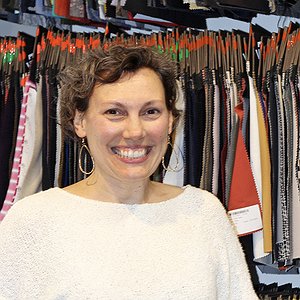
Betsy Franjola
Chief Executive Officer, Hocking Hills Garment Center
President, BFF Studio
Founder, PREFACE
One of the most promising innovations is placing people at the center of how we make our clothes.
Our Appalachian region of Southeast Ohio has experienced generations of economic transition and the loss of industries. Today, advances in small-batch manufacturing, digital tools and supply-chain traceability create opportunity to build something new.
We work with partners to create fully traceable cotton products made entirely in the United States. Brands are able to produce closer to demand, reduce overproduction, and connect consumers directly to the people and places behind their garments.
Sustainability creates meaningful jobs, restores skills and invests in communities that have too often been left behind. A truly sustainable fashion industry must be human centered, creating systems that value the people who make our clothes.
The future will be shaped by systems that are local, transparent and deeply connected to both people and place. The idea that a rural sewing center in Southeast Ohio can help redefine what responsible manufacturing looks like gives us tremendous hope for what comes next.
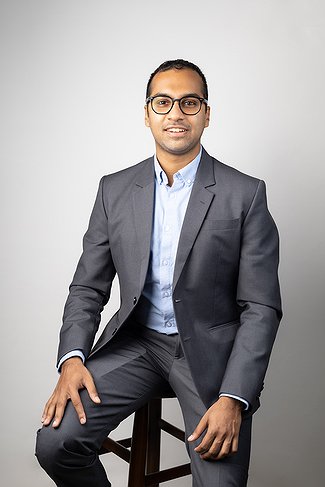
Nipuna Gunaratne
Lead Sustainable Product and Circularity
MAS Holdings
One of the most promising breakthroughs in sustainable fashion is the rapid advancement and scaling of textile-to-textile chemical recycling across multiple fiber types.
What gives me hope is that chemical-recycling technologies are now moving from lab-scale innovation toward pilot and industrial-scale production. These processes can break textiles down to their molecular or fiber-building components and rebuild them into high-quality materials, creating a pathway for true circularity across polyester, nylon and cellulosic blends.
This matters because real textile waste is complex. It is rarely one clean fiber type, and the future of circular fashion depends on technologies that can handle mixed materials at scale.
If chemical recycling can scale commercially across fiber types it will become more than a sustainability initiative—it will be a foundation for the next generation of fashion manufacturing, where performance, scale and circularity work together.

Calvin Huelsman
Sustainability Manager
Elevate Textiles
Chemical textile-to-textile recycling breaks textiles down into their molecular building blocks, removing dyes, finishes and other contaminants, allowing fibers such as polyester, nylon and even blended materials to be regenerated into virgin-quality fibers repeatedly.
New solvent-based and depolymerization technologies can selectively separate and recover individual materials, significantly expanding the volume of textiles that can be diverted from landfills or incineration.
Although chemical T2T recycling is still in its early stages compared to mechanically recycled, bottle-based fibers and currently carries a price premium due to limited capacity, it represents a meaningful step toward truly circular material flows. Combined with improvements in collection and sorting infrastructure, chemical recycling could enable the growth of closed-loop supply chains at a cost comparable to bottle-based recycled fibers while substantially reducing reliance on fossil-based feedstocks.
As demand for recycled materials continues to grow with the support of regulation that prioritizes preferred production pathways, I am optimistic that chemical recycling will scale rapidly by 2030.
Jason Keller
Sustainability Leader, Fibers
Eastman
The industry’s growing ability to turn sustainable innovation into solutions that can truly scale gives me hope.
We’ve spent nearly a decade working toward one ambition: making circularity mainstream and sustainable fashion accessible to everyone. Along the way, we’ve learned that meaningful innovation succeeds only when it combines three essential qualities: scalability, performance and versatility.
Scalability is what transforms promising ideas into real environmental impact. Small initiatives and capsule collections can inspire the industry, but lasting change happens when responsible solutions become available at the scale required by global fashion.
Performance is equally critical. Sustainability should never require compromise. Innovative materials must perform as well as or better than traditional alternatives, delivering the durability, comfort and quality that brands and consumers expect. Versatility enables broader adoption. The more applications a material can serve, from fashion to home textiles and beyond, the greater its potential to replace less-sustainable options across the industry.
Steve McCullough
Event Vice President
Functional Fabric Fair
What’s happening at the very beginning of the supply chain, at the fiber and yarn level, gives me hope. If designers and brands start with ethically sourced, sustainable inputs from day one, the trickle-down effect through the rest of the production process becomes far more manageable. Trying to course correct sustainability at the end is an uphill battle; building it in at the start changes everything.
Alongside that, I’m genuinely excited about the move toward mono-component textiles. A fabric made from a single material, textile-to-textile recycling—our focus topic at this year’s events—is dramatically more accessible, removing real barriers that have slowed circularity in fashion for years.
At Functional Fabric Fair’s Innovation Hub, a dedicated area of our Portland spring and fall editions, we spotlight this kind of early-stage advancement. It’s where emerging technologies and new-to-market solutions get in front of the people who can actually put them to work. I’m optimistic because the ideas exist, the momentum is building, and the industry has a place to find them.

Cindy McNaull
Brand Business Development Director
Cordura
Sustainability—or stewardship as we prefer to call it—is about doing what’s right, for our people, our communities and the environments surrounding our facilities around the world.
The innovation that gives us hope is the emerging science of chemical recycling for post-consumer Nylon 6,6—a material known for its extraordinary performance but is historically difficult to recycle. We’re supporting two distinct pathways: an internal alcohol-based solutioning process that can recover up to 90 percent of Nylon 6,6 from end-of-life materials and an external collaboration with Epoch Biodesign, a pioneer in AI-engineered enzymatic-recycling technology that has already demonstrated recovery of nylon’s core monomers from end-of-life airbags.
What excites us isn’t just the technology—it’s the potential to create a true circular system for one of fashion’s most durable, high-performance fibers. Understanding the market needs, we know that any solution must be price-competitive with virgin polymer, use resources wisely and reach commercialization quickly. We believe durability and recyclability aren’t in conflict—they’re the future of fashion done right.
Philippe Mignot
Project Manager
NextPrinting
For years, digital printing was seen as a promising technology with certain limitations. Today, however, its aesthetic quality, tactile realism and creative possibilities have evolved to compete with traditional manufacturing processes. By applying graphics, effects and finishing treatments directly onto fabric rolls before garment construction, digital printing eliminates many of the resource-intensive processes traditionally carried out after garments are made. Manufacturers simply cut and sew fabrics that are already finished, significantly reducing water, energy and chemical consumption while streamlining production.
Digital printing enables low minimum orders, making on-demand manufacturing and preorder models increasingly viable. It offers an effective way to recover leftover fabrics from previous seasons by transforming them with new graphics instead of discarding them.
The technology is ready. The real challenge now is integrating it intelligently into today’s supply chain, overcoming outdated perceptions and combining it with the manufacturing expertise that already exists. Digital textile printing can become one of the indus-try’s most effective tools for reducing waste while preserving the creativity, flexibility and quality that fashion demands.

John Mitchell
Head of Business Development, North America
Livinguard
Thirty percent of all microplastics released into the ocean stem from synthetic textiles. Up to half a million tons of non-biodegradable fiber fragments from washing textiles are discharged into waterways globally every year. Microfiber and microplastic shedding are often overlooked sustainability challenges for the textile industry, and meaningful mitigation has proven challenging for brands as redevelopment of materials is costly, complex and takes time.
Livinguard Better Fresh is a game-changing textile finishing that does not only provide leading biocide-free and wash-durable odor-control functionality—a valuable benefit for consumers—but the solution has also shown to reduce microfiber shedding during home laundering by up to 80 percent—a critical environmental benefit.
This innovation has the potential to provide actors in the textile industry a scalable and economically viable tool to make meaningful progress in working toward their ambitious goals to reduce pollution from fiber fragmentation.
The environmental benefit can be clearly measured and quantified, providing brands an exciting opportunity to build powerful narratives and make defensible environmental claims toward consumers.

Barbara Oswald
Chief Commercial Officer
BlueSign
The promising change now is the move from claims to proof and the tools that make that possible.
The development I watch most closely is traceability, including Digital Product Passports. Real information about how a product was made should travel with it and be available to brands, regulators and consumers. That only works if the underlying information is sound. This is where the quieter innovation matters.
Most of a garment’s impact is decided early, in the chemistry and processes used to make it, long before anyone sees the finished item. Bluesign has spent over 25 years working at that input stage, gathering and calculating primary data to measure the environmental footprint of manufacturing facilities. The technology I find most promising connects that measured data to the decisions brands and consumers make.
A sustainable future in fashion will not come from louder messaging. It will come from fewer assumptions, better data and earlier intervention in production. The systems being built now to carry that proof forward are what make me optimistic.
Patrizio Siniscalchi
Managing Director
Thermore
The most promising progress in our industry is the development of materials and products that can combine high performance with great durability.
At Thermore, durability is seen as a form of system innovation, where design goes beyond the performance of the product to optimize its behavior over time, ultimately reducing its overall environmental impacts.
We believe that developing and producing durable products means integrating responsibility and performance into a single, cohesive approach.

Cheryl Smyre
Vice President
Parkdale Advanced Materials
One of the most promising advancements shaping the future of sustainable textiles is the ability to engineer synthetic fibers with their entire life cycle in mind.
Innovations that enhance the end-of-life profile of synthetic fibers demonstrate that performance and environmental responsibility can advance together. By enabling synthetic materials to become more bio-accessible in biologically active end-of-life environments while maintaining the durability, comfort and functionality consumers expect, we’re redefining what’s possible for next-generation fiber technologies.
Equally important are material verification and supply-chain transparency. As innovative fiber technologies continue to scale, brands need confidence that the materials they specify are consistently incorporated throughout the manufacturing process. Verification systems strengthen accountability, support responsible sourcing and build trust across the textile value chain.
Profound innovations are grounded in proven science, practical to manufacture and scalable across the global textile industry. When we combine advanced material engineering with transparency and real-world implementation, we create a platform to improve the environmental profile of synthetic textiles while continuing to deliver the performance the industry depends on.
Adam Taubenfligel
Creative Director and Responsibility Lead
Triarchy
The advancement that gives me the most hope isn’t a new material. It’s a new way of thinking about production.
For decades, fashion has approached sustainability by trying to improve systems that were never designed with sustainability in mind. We reduce water, swap fibers, improve efficiencies, and, while those efforts matter, they’re ultimately refinements of an existing model.
What excites me are technologies that eliminate unnecessary processes altogether.
In denim, for example, we’re beginning to see digitally dyed systems that define the final appearance of a garment before it’s ever constructed, removing many of the water—and chemical-intensive wash processes that have long been considered unavoidable. Rather than correcting a garment after it’s made, the desired outcome is designed into it from the beginning.
That shift is profound because it isn’t incremental. It’s structural.
The future of fashion won’t be built by asking how to make existing systems slightly less harmful. It will come from asking whether those systems need to exist at all. For me, that’s where real optimism lies. Not in a single breakthrough, but in technologies that allow us to rethink production from first principles such as reducing complexity, eliminating waste and creating products intentionally rather than correcting them after the fact.
The most exciting innovations don’t make the old system greener.
They make parts of it obsolete.

Melodie van der Baan
Co-founder and Chief Executive Officer
Max Retail
Overproduction is the industry’s quietest sustainability crisis. Every season, independent retailers and brands are left over-indexed on merchandise that gathers dust in stockrooms or ends up in liquidation channels and, too often, landfills.
This is the problem we set out to solve at Max Retail. Our platform connects brick-and-mortar retailers and brands to a global e-commerce network so excess inventory finds a rightful home with shoppers who want it. Sellers earn meaningful payouts from goods that would otherwise go unsold.
What excites me most is where this technology is headed: solving fashion’s inventory problem further upstream. The real opportunity is catching excess earlier by moving in-season overstock before it ages and giving retailers SKU-level data for smarter markdowns, demand forecasting and buying. That is how the industry gets to lean on inventory businesses that produce less waste, and this is a path we’re committed to at Max Retail.
Andrea Venier
Managing Director
Officina39
For decades, potassium permanganate has been one of the industry’s most widely used tools to create localized abrasion, contrast and vintage effects. But the direction is now clear: Permanganate salts are progressively moving out of the acceptable-chemistry toolbox, and that accelerates significantly the need for scalable alternatives.
One early-stage innovation that gives us real hope is ZERO PP ALL.IN, Officina39’s new approach to replacing potassium permanganate in denim finishing. It is not only more sustainable in theory but is also designed to be industrially realistic. The product is applied directly onto raw garments and works with technologies already widely adopted by modern laundries, especially laser and ozone. This means the industry does not need to choose between compliance, creativity and productivity.
It’s the type of innovation fashion needs: not a niche solution, not a compromise, but a chemistry and process platform that makes the better choice also the practical choice. It represents a more hopeful future because it proves sustainable denim finishing can be creative, scalable, efficient and economically viable.

Matteo Vivolo
Chief Sales Officer
Vivolo
When people ask what gives us hope for the future of fashion, our answer begins with a material we have worked with for nearly fifty years: leather.
Over the years we’ve introduced new materials and technologies to meet changing market needs and growing sustainability expectations. Yet leather remains at the heart of our business. As a byproduct of the food industry, it already represents an important example of resource recovery and value creation.
The next frontier is making leather truly circular. There is enormous potential to recover and recycle leather offcuts and leftover materials through technologies that are both effective and scalable.
We are beginning to collaborate with universities and research centers to support projects focused on leather recycling. Innovation is not only about discovering new materials but also about unlocking the full potential of the materials we already have.
Truly closing the loop for leather will reduce waste, preserve the value of a remarkable natural material and help build a more responsible future for the fashion industry.

Marjory Walker
Co-director
U.S. Cotton Trust Protocol
What brings me the greatest hope is seeing how on-farm precision tools can support the deep care growers have always had for their land. For generations, farming families have quietly nurtured their fields, and, today, optional innovations like GPS-guided systems and smart sensors simply help them measure and build upon that stewardship with even greater accuracy.
It is wonderful to see practices like cover cropping and crop rotation now adopted by the majority of our growers, enhancing soils and conserving resources. Advanced field-verification technologies allow us to prove those positive efforts with precision rather than relying on estimates alone.
It bridges the soil and the storefront, turning everyday on-farm care into clear, verified data. Through the U.S. Cotton Trust Protocol’s new Field Partner Program, we pair field visits with satellite imagery analysis to bring greater visibility to the work our growers are already doing and the data already being reported by the program, giving brands traceable regenerative cotton and a clearer pathway to meet their sustainability targets.

MeiLin Wan
Founder and Chief Executive Officer
GenuTrace
Molecular-level verification technologies give us hope. Stable-isotope analysis reads the chemical signature a fiber picked up from its growing environment—the water, soil and climate of a specific region—and checks it against supplier claims. DNA tagging takes a different but complementary approach, physically marking fiber at the source so it can be tracked forward through every stage of production.
What gives us hope is how these tools are converging with regulation at the right moment. With UFLPA enforcement, EUDR and Digital Product Passport requirements all pushing brands toward verifiable origin data, science-based traceability is moving from a nice-to-have to a baseline expectation. That shift incentivizes the entire industry, not just the most diligent brands, to build supply chains that can actually prove what they claim.
Innovations like COLOURizd’s direct color application point to the same future from a different angle: rethinking processes that have gone largely unchanged for decades. Combining process innovation with verification technology is what will make sustainability claims in fashion credible, not just aspirational.

Peter Whitcomb
Chief Executive Officer
Tersus Solutions
What gives me the most hope isn’t a single breakthrough but the industry’s movement in a more aligned, practical direction. Across brands, manufacturers and innovators, there’s real momentum behind solutions that don’t just sound sustainable but actually work and are profitable at scale within existing systems.
Our proprietary CO2 cleaning process is one example of that shift. It uses captured CO2 in a closed-loop system to gently clean and restore materials in ways traditional water-based processes can’t always achieve. Because the CO2 is reused rather than created for this purpose, it reduces the impacts of traditional water cleaning by eliminating water and harsh chemicals, capturing all of the microfibers that would otherwise enter the waste stream and reducing energy use.
What’s most encouraging is that this isn’t happening in isolation. It’s part of a broader industry move toward more-circular, resource-efficient solutions designed to fit real-world manufacturing and retail systems, not sit outside them. That combination of practicality and progress is what makes this moment feel different.

David Williamson, PhD
Chief Executive Officer
Modern Meadow
What gives me genuine hope is the convergence of chemical recycling technology with bio-designed materials—and the fact that these two fields are finally starting to talk to each other.
The real opportunity lies in closing the loop entirely. What excites me about emerging chemical recycling processes—technologies that can break materials down to their molecular building blocks and recapture that carbon for reuse—is that they create the conditions for true circularity, not just a slower path to the landfill.
We’ve built INNOVERA with end-of-life in mind from day one. Through partnerships like the one we have with BASF, we’re actively exploring pathways where the material can be collected, chemically recycled and its carbon redeployed into new products.
The broader ecosystem is catching up.
Brands are moving beyond capsule collections and starting to ask harder questions at the design phase: How will this material be recovered? Who will take it back? The infrastructure for collection and processing is still nascent, but the commercial will be forming—and that matters enormously.

Mosha H. Zhao
Global Marketing Director for C4 Platform
CovationBio Materials LLC
What excites us most is the value‑chain collaboration—from feedstock innovation to apparel-fiber applications.
Xatryx is a second generation, non-food biomass‑derived PTMEG produced from agricultural byproducts like corncobs via advanced thermochemical technology. As a second generation bio-based feedstock, it does not compete with human food. More importantly, Xatryx is designed as a true drop‑in solution: Polyurethane and elastomer manufacturers can adopt it without modifying existing production processes or compromising performance. This removes the single biggest barrier to mass adoption—costly retooling.
Huafon Group, a global spandex leader, will be the first to turn this innovation into fiber applications in apparel. As a key raw material for Huafon’s FREEMOUNT second-generation bio-based spandex, Xatryx can serve as a drop‑in replacement for fossil-based PTMEG in producing high-performance and functional spandex with lower carbon emissions.
With multiple decades of our research-and-development efforts, it is a real and scalable transition—and that is exactly the kind of hope fashion urgently needs.
Responses have been edited for clarity and space.